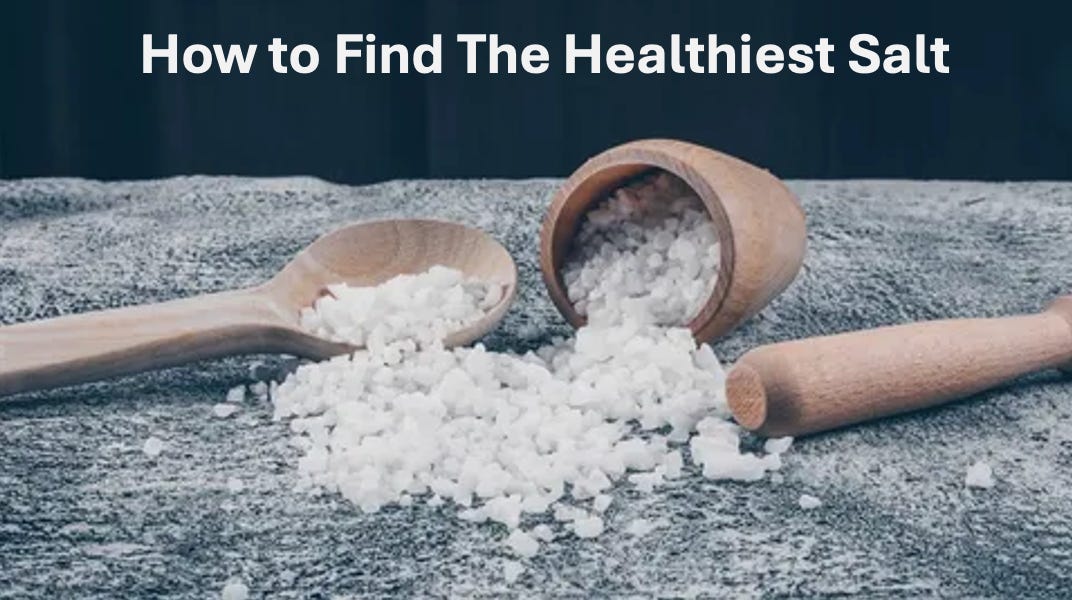
What is the Salt Trick for Men ? : Salt, Healthy Blood Pressure Levels, and Libido.

I just finished reading the book The Salt Fix, and it addresses many topics which have come up in various threads here so I am posting some highlights, along with a few other items not covered in the book. The book has been out about ten years and I have heard many podcasts with the author, but the book covers many interesting details I don’t remember from any of the podcasts. So for those who like to read, I strongly recommend it, not only because of the useful information it contains, but because it is an ongoing example of how bad information is perpetuated to this day despite many lines of evidence and logic strongly suggesting that minimizing salt/sodium is terrible advice.

the salt fix book review.webp

To summarize the book’s message in one sentence, the body can easily deal with too much salt in all but very rare extremes, however too little salt is surprisingly easy to achieve (especially for people who sweat a lot as most of us here between sauna and activity are likely doing, or who take drugs that have the side-effect of lowering sodium) and creates many non-intuitive forms of damage that the body cannot overcome without salt. (I am using salt and sodium interchangeably here, although technically sodium is a subset of salt.) A few highlights from the book include:

  • Low Salt intake can lower libido and fertility, so those looking for things to raise either should err on the higher side of salt intake. This seems to be a very under-publicized issue given all the threads here and elsewhere looking for libido-boosting methods.
  • Low potassium intake is far more likely to cause high blood pressure than high salt, and potassium should be one of the first things to look at to optimize blood pressure
  • Low salt will raise heart rate and blood viscosity (both of which are harmful) to a degree that outweighs any benefit from a minor lowering of blood pressure, if it were to occur.
  • Low salt can actually raise blood pressure in some cases and the negative of low salt extends to many body systems that have nothing to do with blood pressure
  • There are commonly used drugs that can lower the amount of sodium in the body which would make avoiding salt even more dangerous.
The book is extensively referenced, and while I don’t have the knowledge to personally validate everything in it, the author cites numerous examples that back up the logic of his arguments, such as non-industrialized tribes with very low salt intake who also have very low fertility, to cite just one example. My only quibble with the book is that the author spends a lot of time making the case that sugar is causing much of the harm that salt has been blamed for, however more recently it has become clearer that excess intake of omega-6 fats is likely just as big a factor as sugar, however that doesn’t change the basic message of the book.

While not mentioned in the book, a couple of items to be aware of:

  • People with large upper arms may often need a larger-than-standard cuff to get an accurate reading, and the standard cuffs may tend to read too high.
  • Blood pressure readings can vary a lot so numerous readings under varying circumstances are necessary to start to get an accurate picture
  • Blood pressure can tend to be higher in cold conditions
  • If you are someone who doesn’t sweat very much in situations where you should like a sauna or working outdoors in the heat, this can be a sign that your body is low on something (like Iodine) that normally would be lost in sweat but which your body is trying to conserve. Sweat is also a key part of the body’s detox system and not something that you want to minimize.
Personally, since I raised my salt intake (especially in my pre-workout concoction) I have seen no rise in my blood pressure and if anything it has dropped a bit although that could be just random variation.
 
Last edited by a moderator:
Trending natural cure "Blue Salt Trick for Men" promises to boost male performance, increase circulation, and treat erectile dysfunction (ED). Although it has become well-known on websites including YouTube, TikHub, and Reddit, its efficacy is still mostly anecdotal and supported by little scientific data.

Describe the Blue Salt Trick.
The technique is dissolving a tiny quantity of premium salt—often known as "blue salt—in warm water and then drinking it, either Persian blue salt or Hawaiian blue sea salt. Proponents claim this technique increases nitric oxide generation and enhances blood flow, therefore addressing any ED and stamina problems.

How to Execute the Trick
Get a warm water glass.

Add a bit of mineral-rich salt—such as blue, Himalayan, or sea salt.

Fully stir the mixture.

Drink it empty-handed or just before a close-up.

claimed advantages
Enhanced Circulation: The mineral makeup of salts such as Persian blue salt could help blood vessels to widen.

Claims include more stamina and firmness during intimacy, hence improving sexual performance.

Natural Solution: There is no synthetic chemical involved nor any intrusive surgery.

Daily ease of use: just fifteen seconds.

Scholarly Data
Although supporters point to studies showing minerals improve vascular health, there is no solid proof showing that eating blue salt especially treats ED or greatly improves performance. The unusual mineral concentration of salts such as Persian blue salt (e.g., potassium, magnesium) may enhance overall health but does not guarantee specific outcomes for sexual dysfunction.

Exercise caution; most assertions are based more on anecdotal evidence than on thorough research.

Too much salt can cause health problems like high blood pressure.

Marketing hype: Some sources overstate outcomes without any reliable support.

All things considered, although the Blue Salt Trick is simple to follow and may provide some slight circulatory advantages from its mineral content, its efficacy for ED or performance enhancement is not supported by science. Men looking for dependable answers should see doctors for evidence-based therapies.
 
Trending natural cure "Blue Salt Trick for Men" promises to boost male performance, increase circulation, and treat erectile dysfunction (ED). Although it has become well-known on websites including YouTube, TikHub, and Reddit, its efficacy is still mostly anecdotal and supported by little scientific data.

Describe the Blue Salt Trick.
The technique is dissolving a tiny quantity of premium salt—often known as "blue salt—in warm water and then drinking it, either Persian blue salt or Hawaiian blue sea salt. Proponents claim this technique increases nitric oxide generation and enhances blood flow, therefore addressing any ED and stamina problems.

How to Execute the Trick
Get a warm water glass.

Add a bit of mineral-rich salt—such as blue, Himalayan, or sea salt.

Fully stir the mixture.

Drink it empty-handed or just before a close-up.

claimed advantages
Enhanced Circulation: The mineral makeup of salts such as Persian blue salt could help blood vessels to widen.

Claims include more stamina and firmness during intimacy, hence improving sexual performance.

Natural Solution: There is no synthetic chemical involved nor any intrusive surgery.

Daily ease of use: just fifteen seconds.

Scholarly Data
Although supporters point to studies showing minerals improve vascular health, there is no solid proof showing that eating blue salt especially treats ED or greatly improves performance. The unusual mineral concentration of salts such as Persian blue salt (e.g., potassium, magnesium) may enhance overall health but does not guarantee specific outcomes for sexual dysfunction.

Exercise caution; most assertions are based more on anecdotal evidence than on thorough research.

Too much salt can cause health problems like high blood pressure.

Marketing hype: Some sources overstate outcomes without any reliable support.

All things considered, although the Blue Salt Trick is simple to follow and may provide some slight circulatory advantages from its mineral content, its efficacy for ED or performance enhancement is not supported by science. Men looking for dependable answers should see doctors for evidence-based therapies.
I had never heard of this but it sounds like a classic example of where correcting a deficiency will correct a problem. Many people are likely deficient in something in salt given how demonized it has been, so correcting that will help those people but will not help others who already get plenty of salt.
 
I have been experimenting with different amounts of salt for close to 20 years. I found that for me higher salt intake is correlated with a lower BP. No questions about that. And once I was deep into I found that 7-9g of salt keeps my BP low and I felt great. Now mind you I have tried the lo-salt tricks, and have seen my BP spiking like a XXXXX. Obv more variables were involved though. This is not for everybody as we all are very different so everyone needs to find their own sweetspot. I'm eager to go back on TRT and see if salt increase helps to reduce BP spikes I used to get while being on a year or so ago. During my BB days I tried up to 16g of salt/day to see what happens and how I performed because I was living and training like a future Olympian for close to 15 years. That was a failed experiment as it only helped my performace in the field but didn't help with BP reductions IIRC. Mind you I had to eat trucks of carbs and that alone will increase your BP. So if I decide to go back on TRT which I really want to, I will def experiment with increased salt intake and see if I can replicate my results like with 7-9g of salt while being off TRT. Will keep you guys posted or create new thread to not derail this one.

Regards.
 
I have been experimenting with different amounts of salt for close to 20 years. I found that for me higher salt intake is correlated with a lower BP. No questions about that. And once I was deep into I found that 7-9g of salt keeps my BP low and I felt great. Now mind you I have tried the lo-salt tricks, and have seen my BP spiking like a XXXXX. Obv more variables were involved though. This is not for everybody as we all are very different so everyone needs to find their own sweetspot. I'm eager to go back on TRT and see if salt increase helps to reduce BP spikes I used to get while being on a year or so ago. During my BB days I tried up to 16g of salt/day to see what happens and how I performed because I was living and training like a future Olympian for close to 15 years. That was a failed experiment as it only helped my performace in the field but didn't help with BP reductions IIRC. Mind you I had to eat trucks of carbs and that alone will increase your BP. So if I decide to go back on TRT which I really want to, I will def experiment with increased salt intake and see if I can replicate my results like with 7-9g of salt while being off TRT. Will keep you guys posted or create new thread to not derail this one.

Regards.
Yes, there's a mechanism whereby low salt( likely sodium) triggers a defensive mechanism to retain sodium which has the side effect of raising blood pressure. IIRC it is described in the book.
 
Interesting post on Suppversity f/book page - low sodium levels can cause anxiety behavior (at least in mice) due to reduced dopamine and serotonin


Post links to this article -

 
Interesting post on Suppversity f/book page - low sodium levels can cause anxiety behavior (at least in mice) due to reduced dopamine and serotonin


Post links to this article -


Bit odd the f/book link was censored?..
 
To summarize the book’s message in one sentence, the body can easily deal with too much salt in all but very rare extremes, however too little salt is surprisingly easy to achieve (especially for people who sweat a lot as most of us here between sauna and activity are likely doing, or who take drugs that have the side-effect of lowering sodium) and creates many non-intuitive forms of damage that the body cannot overcome without salt. (I am using salt and sodium interchangeably here, although technically sodium is a subset of salt.) A few highlights from the book include:


Cardiovascular Health, Athletic Performance, and the Sodium Intake Debate​

Executive Summary​

Contemporary medical research and clinical observations are increasingly challenging the long-standing dietary orthodoxy regarding low-sodium intake. While standard guidelines often recommend a daily maximum of 2.3 grams of sodium, evidence suggests that intake below 3 grams may significantly increase the risk of cardiovascular events and mortality, even in individuals with hypertension. Sodium is a physiological necessity; its deficiency triggers a cascade of stress hormones—including noradrenaline and aldosterone—that can lead to arterial stiffening, insulin resistance, and elevated heart rates.

Beyond basic health, sodium serves as a critical performance enhancer for athletes, facilitating vasodilation, temperature regulation, and acid buffering. However, the physiological response to salt is not universal. Some individuals exhibit "salt sensitivity," manifesting as isolated systolic hypertension, particularly when other factors like high hematocrit or specific medications are present. This briefing document synthesizes data from clinical reviews, historical perspectives, and expert insights to provide a comprehensive overview of the multifaceted role of salt in human health.
--------------------------------------------------------------------------------

salt is important for health.webp

The Cardiovascular Controversy: Reassessing Sodium Guidelines​

The traditional view that "less is always better" regarding salt intake is under scrutiny due to findings of a "U-shaped" risk curve, where both extremely high and low intakes are associated with adverse outcomes.

Risk Thresholds and Clinical Outcomes​

A major review published in The Lancet, which followed 133,118 people over four years, revealed critical data regarding sodium consumption:
  • Low Intake Risks: For individuals without hypertension, consuming less than 3 grams of sodium daily was associated with a 26% increased risk of death or cardiovascular events (heart attack, stroke) compared to those consuming 4 to 5 grams.
  • Hypertensive Vulnerability: In people with high blood pressure, consuming less than 3 grams increased the risk of clinical events by 34%.
  • High Intake Thresholds: Consuming more than 7 grams of sodium daily increased risk by 23% in hypertensive individuals, but notably, it did not increase risk or death in those with normal blood pressure.

The Blood Pressure Paradox​

The lead researcher of the Lancet review, Andrew Mente, notes that while reducing salt can lower blood pressure, relying on that metric alone is insufficient. Low sodium intake may cause harm that outweighs the benefit of marginally lower blood pressure. The goal should be the prevention of actual clinical events—mortality, heart attack, and stroke—rather than the manipulation of a single biomarker.
--------------------------------------------------------------------------------

Physiological Impacts of Sodium Deficiency​

When sodium levels drop below approximately 3,000 milligrams per day, the body enters a state of physiological stress to conserve its remaining supply.

Hormonal Disruption​

Sodium restriction activates the body's emergency conservation systems:
  • Stress Hormones: Noradrenaline and adrenaline become chronically elevated.
  • Arterial Stiffening: Levels of aldosterone and renin-angiotensin increase; these hormones are known to stiffen arteries and are the primary targets of many cardiovascular medications.
  • Adrenal Stress: Constant demand for aldosterone production can lead to adrenal hypertrophy and contribute to "adrenal fatigue."

Metabolic and Systemic Consequences​

  • Insulin Sensitivity: Salt restriction has been linked to increased insulin resistance, potentially leading to easier fat storage.
  • Lipid Profiles: Low salt intake can result in elevated triglycerides and LDL cholesterol while decreasing beneficial HDL cholesterol.
  • Bone Health: To maintain blood sodium levels, the body may strip sodium from the bones, a process that simultaneously leaches calcium and magnesium, potentially contributing to osteoporosis.
  • Digestion: Sodium provides the chloride necessary for hydrochloric acid (HCl) production. Insufficient intake can lead to poor nutrient absorption and bacterial overgrowth.
--------------------------------------------------------------------------------

Salt as a Performance and Health Enhancer​

For active individuals, sodium is described as a "poor-performance preventer" and a potent natural vasodilator.

The "Six Factors of Fitness"​

As outlined by Dr. James DiNicolantonio, salt provides several critical benefits for athletic optimization:
  1. Temperature Regulation: Enhances the body's ability to cool itself through more efficient sweating.
  2. Reduced Heart Rate: Allows for higher intensity and longer duration of exercise.
  3. Increased Circulation: Improves oxygen delivery and reduces muscle cramping.
  4. Acid Buffering: Aids in removing hydrogen ions from cells during intense exertion.
  5. Enhanced Vasodilation: Improves blood flow and heat release.
  6. Fatigue Prevention: Prevents the tissue salt depletion associated with overtraining.

Strategic Supplementation​

  • Pre-Workout Loading: Consuming approximately half a teaspoon of high-quality mineral salt 20 minutes before exercise can ensure adequate sodium is available when sweating begins.
  • Fluid Retention: Increased salt intake increases intravascular fluid volume, which can be beneficial for performance but may also cause a temporary rise in blood pressure for some.
  • Sweat Losses: Intense activity can result in the loss of 1,000 to 6,000 milligrams of sodium per hour. It also depletes iodine (up to 100mcg/hr) and copper (approx. 0.5mg/hr).
--------------------------------------------------------------------------------

Individual Variation and Clinical Indicators​

While many benefit from higher salt, "salt sensitivity" and individual health status must be considered.

Salt Sensitivity and Hypertension​

  • Isolated Systolic Hypertension: Some users report significant blood pressure spikes (e.g., 20 points) after adding salt, leading to readings above 140 mm Hg.
  • Causative Factors: High hematocrit (HCT) levels, often seen in those on Testosterone Replacement Therapy (TRT), can exacerbate blood pressure responses to salt.
  • Fluid Retention: The body holds water to dilute serum sodium; thus, high salt intake often presents as increased water weight rather than high sodium levels on lab tests, unless the patient is dehydrated.

Diagnostic Signs of Sodium Deficiency​

The following indicators may suggest a need for increased salt:
  • Physical Symptoms: Dizziness when standing (orthostatic issues), fatigue, muscle spasms, and poor capillary refill.
  • Laboratory Markers: Elevated Blood Urea Nitrogen (BUN) (often mistaken for simple dehydration), low fractional excretion of sodium, and elevated calcium/magnesium in the urine.
  • POTS: Postural Orthostatic Tachycardia Syndrome often responds favorably to increased salt.

Balancing Minerals​

Sodium must exist in balance with other minerals:
  • Potassium: Low potassium intake is often a more significant driver of high blood pressure than high salt. Potassium and sodium must be balanced to optimize cardiovascular health.
  • Magnesium: Essential for preventing muscle cramps and supporting sleep/anxiety. Magnesium glycinate and magnesium chloride are noted for their high bioavailability.
  • Iodine: Crucial for thyroid health; significant amounts are lost through sweat.
--------------------------------------------------------------------------------

Quality and Sources of Salt​

The source of salt significantly impacts its health profile, particularly regarding mineral content and contaminants.

Salt TypeKey Characteristics
Table SaltRefined; lacks mineral cofactors; often contains anti-caking agents; lacks natural iodine.
Redmond Real SaltSourced from ancient ocean beds; free of modern pollutants like microplastics.
Celtic Sea SaltNotably high in magnesium (approx. 40mg per 10g).
Himalayan Pink SaltContains modest amounts of potassium and trace minerals.

The Microplastic Concern: Modern sea salts harvested from current oceans have been found to contain microplastics, which can act as endocrine disruptors. Ancient salt sources (Redmond or Himalayan) are preferred to avoid these contaminants.
--------------------------------------------------------------------------------

Conclusion​

The evidence suggests that the "war on salt" may have unintended negative consequences for a large segment of the population. While salt restriction remains necessary for a specific minority of salt-sensitive individuals with hypertension, the broader population—especially those who are active, use saunas, or consume low-carb diets—may be at risk of sodium deficiency. Optimal health requires moving away from arbitrary low-salt limits and instead focusing on the quality of salt, balancing it with potassium and magnesium, and responding to the body’s natural physiological demands.
 

ExcelMale Newsletter Signup

Online statistics

Members online
5
Guests online
451
Total visitors
456

Latest posts

Beyond Testosterone Podcast

Back
Top