

Low SHBG issues dialing in,
So I started TRT again after taking a year off from it, pre try my leveled where 402 TT, 9FT, e2 24
had issues with libido , ED and morning wood nonexistant, plus some bad crash when i took proviron a couple times, felt horrendous like low T and low E2,
Tried clomid, gave me permanent eye floaters but i felt good on it, despite getting my test to just 710 and free test of 13, but ed and libido where not perfect
now I’m trying to do a simpler approach, enanthate only, sub q every day, 120mg a week
But there is a very poor reponse
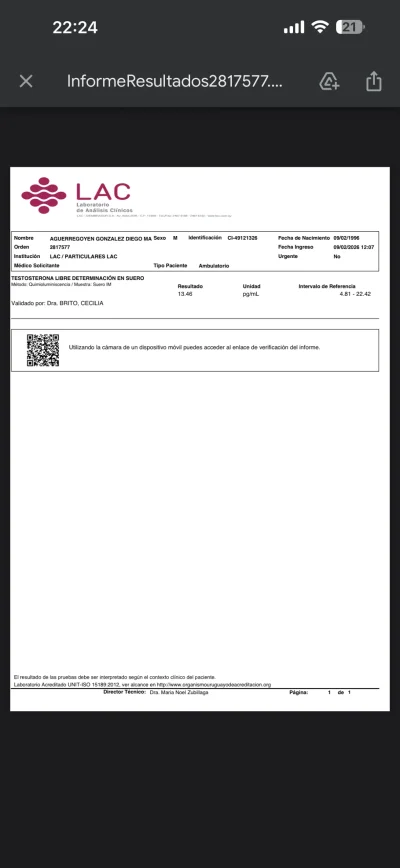
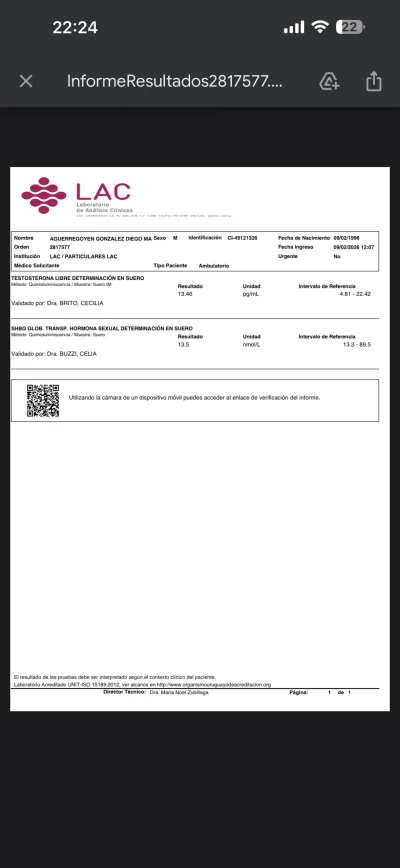
My shbg is low at 13.5
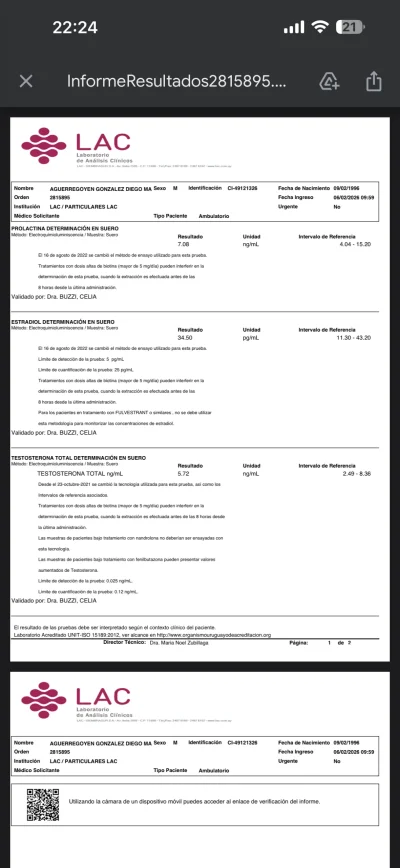
e2 mildly elevated at 34
prolactin at 7
totally test is 560
free test is 13,2
I’m having very bad ED issues, that are causing extreme depression, i’m feeling really bad guys, so bad i have considered suicide at times, because it’s so frustrating no being able to see the benefits of try and only making things worse.
My glycosilated hemoglobin is 4.8
tsh is at 2 (take 50mcg t4
Why proviron crashes me? why is my shbg is low and yet my free testosterone is also low? i feel like a ruined my life, any support would be appreciated
Bienvenido a la casa de Nelson!
Please seek out a professional to address your depression as you are in a bad place mentally and it is a serious concern.
Do not beat yourself up as many men suffer from ED and there is always a way to improve your situation.
Various ED meds that are very effective (PDE-5is/intracavernosal injections/therapy and counselling).
We all have ups/downs some worse off then others but there is always hope.
Surround yourself with support as it is critical to get your mind out of the gutter.
Lots of support on the forum if you need to speak with someone.
Many have been in a similar place.
now I’m trying to do a simpler approach, enanthate only, sub q every day, 120mg a week
But there is a very poor reponse
My shbg is low at 13.5
e2 mildly elevated at 34
prolactin at 7
totally test is 560
free test is 13,2
why is my shbg is low and yet my free testosterone is also low?
Numerous reasons why one can have low SHBG, biological, nutritional and pathological factors that regulate sex hormone binding globulin.
For some men it is genetic polymorphisms.
Although TT is important to know FT is what truly matters as it is the active unbound fraction of T responsible for the positive effects.
The only way you would know where your FT truly sits would be to have it tested using the most accurate assay the gold standard Equilibrium Dialysis especially in cases of altered SHBG.
If you do not have access to such as the testing method is not widely available outside of the US then you would need to use/rely on the next best testing method which would be the calculated linear law-of-mass action Vermeulen (cFTV) which will give a good approximation.
Just to clear up any confusion here your free testosterone is not low as you never had it tested using an accurate assay.
You reside in Uruguay and the labs testing method used for your free testosterone was the known to be inaccurate direct chemiluminescent immunoassay (CLIA).
Highly doubtful you have access to the gold standard Equilibrium Dialysis so you would need to use/rely on the calculated Vermeulen method which is available online for free.
In order to calculate your FT you need to know your TT, SHBG and Albumin.
If you do not have Albumin then you can use the default 4.3 g/dL.
If we take your robust TT 560 ng/dL, low SHBG 13.5 nmol/L and Albumin 4.3 g/dL then your FT 17.7 ng/dL would be very healthy.
You are hiring a. robust TT 560 ng/dL and although it is not very high its because you have low SHBG.
With a robust TT 560 ng/dL and low SHBG 13.5 nmol/L it would be a given that your FT is healthy and far from low.
FT <5 ng/dL would be considerd low.
FT 5-9 ng/dL would be considered the grey zone where some men may experience symptoms of low-T.
FT 10-15 ng/dL would be healthy.
FT 20-25 ng/dL would be high-end/high.
The majority of men will do well with a trough FT 15-25 ng/dL depending on the injection frequency.
Just to put this in perspective most healthy young males would be hitting a cFTV 13-15 ng/dL or 10-12 ng/dL tested using the most accurate assay the gold standard Equilibrium Dialysis and this is a short-lived daily peak to boot!
Even if you take those natty outliers in the 95th percentile hitting a high FT 25 ng/dL again this is a short-lived daily peak to boot!
You are hitting. a very healthy FT 17.7 ng/dL on dailies.
Not sure how many hours post-injection you had your blood work done as we always want to test at the true trough (lowest point) before your next injection which in your case would be 24 hrs post-injection.
Even then your peak--->trough would be minimal when injecting daily as blood levels will be very stable throughout the week.
I would not put the blame on injecting sub-q here as you are clearly hitting a robust TT 560 ng/dL and more importantly a very healthy FT 17.7 ng/dL injecting 120 mg T/week split 20 mg T daily.
If you want to switch over to IM then do what you feel is best for you.
Yes you would have room to bring up your FT but even then highly doubtful your T it is the cause of your ED as the threshold for T and erectile function is not that high and your FT 17.7 ng/dL tested using an accurate method cFTV would be very healthy and far from low.
Keep in mind that erectile dysfunction let alone libido are complex and multifactorial.
*ED is a condition that affects a multitude of men and is multifactorial in its etiology
*There is a multitude of etiologies for ED, including vasculogenic, neurogenic, psychogenic, endocrinologic, and medication-induced ED
As I have stated numerous times on the forum over the years having a healthy FT is only one piece of the puzzle as libido let alone ED are multifactorial.
Getting quality sleep, minimizing stress (physical/mental), following a healthy diet, exercising/staying active, improving overall vascular health will have a far bigger impact than jacking up your steady-state/trough FT.
One needs to have realistic expectations especially when it comes to libido and erectile function as there is much more involved than T, DHT, estradiol and prolactin.
Too many are always caught up on the hormonal aspect here.
Also keep in mind that psychological stress (depression/anxiety) will cause the body to release adrenaline which is an erection killer.
Adrenaline is a vasoconstrictor, think sympathetic nervous system and penile smooth muscle.
Depression can easily have a negative impact on sexual arousal, libido, and the neurological pathways involved in erections.
Of course having healthy testosterone levels is beneficial to one's libido/erectile function but it is far from the only thing that is required to achieve such.
Much more involved than just having healthy testosterone levels.
Thyroid/adrenals, neurotransmitters, stress (mental/physical), quality of sleep, diet/insulin sensitivity let alone underlying vascular health can all have a big impact on one's libido/erectile function.
Unfortunately, libido/ED is much more complex than simply having healthy testosterone levels.
Suffering from depression can easily put a hamper on one's libido let alone contribute to ED.
Although T-therapy can improve anhedonia, mild-moderate depression, anxiety, and overall well-being it is highly doubtful that it will have a big impact on treating MDD.
Keep in mind that even men with healthy testosterone levels can still suffer from mild, moderate, or severe depression.
Look over pot #3
14:20-16:47 (erections/erectile dysfunction)
You need 5 things to get a good erection:
1. good blood flow
2. good nerves
3. good testosterone levels
4. neurotransmitters/arousal
5. state of mind
We do it big here at Nelson's stomping ground!
Dr. Leen Antonio (UZ Leuven)!
She has collaborated with the heavyweights in the field Dr. Bhasin and Dr. Jasuja (Brigham and Women's Hospital)), Dr. Fiers and team (UZ Ghent) on research related to free testosterone.
Nelson's house!
We get deep here!
Dr. Winters!
Sex Hormone-Binding Globulin: Biology and Clinical Biomarker Applications
Presented by Dr. Steve Winters, Emeritus Professor, Division of Endocrinology and Metabolism
Endocrinology Grand Rounds Summary
Introduction
Sex hormone-binding globulin (SHBG) represents one of the most clinically significant biomarkers in endocrinology, with implications extending far beyond its traditional role in hormone transport. Dr. Steve Winters, a world-renowned authority on SHBG research, recently presented...