Stopped TRT Cold Turkey after 7+ years, hit 702 T on Blood Test

albert88

Member
Long story short, I was on TRT for about 7-8 years, injecting 2-4 time a week for a total of ~150mg of T Cypionate.

On June 14th I had my last injection of 70 mg.

I quit cold turkey, no HCG, no other support.

Blood test from last week hit 702 for Total T.

My sack never got smaller throughout these years. I used HCG a total of ~5 times throughout this entire time.

Am I an outlier, or, is recovery more common than what we think it will be?

Before anyone asks, I don't have a pre-TRT blood test and yes the doc prescribed me (legit) without it but I'm almost certain I was low T prior to this (due to life circumstances, including a divorce, where I had lost most of my muscle mass and was looking skinny).
 
Last edited by a moderator:
Long story short, I was on TRT for about 7-8 years, injecting 2-4 time a week for a total of ~150mg of T Cypionate.

On June 14th I had my last injection of 70 mg.

I quit cold turkey, no HCG, no other support.

Blood test from last week hit 702 for Total T.

My sack never got smaller throughout these years. I used HCG a total of ~5 times throughout this entire time.

Am I an outlier, or, is recovery more common than what we think it will be?

Before anyone asks, I don't have a pre-TRT blood test and yes the doc prescribed me (legit) without it but I'm almost certain I was low T prior to this (due to life circumstances, including a divorce, where I had lost most of my muscle mass and was looking skinny).

Blood test from last week hit 702 for Total T.


Shooting in the dark here.

This means absolutely nothing without knowing where the most important blood marker free testosterone sits.

If you have high SHBG your FT can easily be sub-par as in far from stellar.

You need to test your FT to see where your baseline truly sits.

TT means nothing when looking at the bigger picture here.

You should have known this after all these years.

Test the critical fraction so we can see how well you have recovered 4+ months after stopping T therapy!


Long story short, I was on TRT for about 7-8 years, injecting 2-4 time a week for a total of ~150mg of T Cypionate.

On June 14th I had my last injection of 70 mg.

I quit cold turkey, no HCG, no other support.

My sack never got smaller throughout these years. I used HCG a total of ~5 times throughout this entire time.


If you were injecting ~150mg T/week then it is a given there would be some degree of testicular atrophy especially seeing as you only used hCG 5 times over a 7-8 period on T therapy.

Even then during that 7-8 year stint you were hitting a very high trough TT and more importantly trough FT and throw in the times you were injecting that absurd. dose 200 T mg/week, or when you added in nandrolone, dabbled with oxandrolone and that mini blast 400 mg T/week which has absolutely nothing to do with T therapy.

Overkill here.

No way you never experienced any testicular atrophy.

My reply from an older thread.

Most men are judging testicular size whether a natty baseline or on T therapy by feel as in palming the testes in the hand.

Maybe the wife or girlfriend fondling your family jewels too LOL!

Unfortunately the only way to truly know how much shrinkage occurred on solo exogenous T or growth when adding hCG or hCG + FSH would be using a prader orchidometer most commonly used by endocrinologists or the gold standard high frequency scrotal ultrasound or even an MRI.

 
Long story short, I was on TRT for about 7-8 years, injecting 2-4 time a week for a total of ~150mg of T Cypionate.

On June 14th I had my last injection of 70 mg.

I quit cold turkey, no HCG, no other support.

Blood test from last week hit 702 for Total T.

My sack never got smaller throughout these years. I used HCG a total of ~5 times throughout this entire time.

Am I an outlier, or, is recovery more common than what we think it will be?

Before anyone asks, I don't have a pre-TRT blood test and yes the doc prescribed me (legit) without it but I'm almost certain I was low T prior to this (due to life circumstances, including a divorce, where I had lost most of my muscle mass and was looking skinny).
Congratulations, sounds like so far it's working out for you.
 
Long story short, I was on TRT for about 7-8 years, injecting 2-4 time a week for a total of ~150mg of T Cypionate.

On June 14th I had my last injection of 70 mg.

I quit cold turkey, no HCG, no other support.

Blood test from last week hit 702 for Total T.

My sack never got smaller throughout these years. I used HCG a total of ~5 times throughout this entire time.

Am I an outlier, or, is recovery more common than what we think it will be?

Before anyone asks, I don't have a pre-TRT blood test and yes the doc prescribed me (legit) without it but I'm almost certain I was low T prior to this (due to life circumstances, including a divorce, where I had lost most of my muscle mass and was looking skinny).
You left out the most important part…


How have you felt along the way and how do you feel now?
 
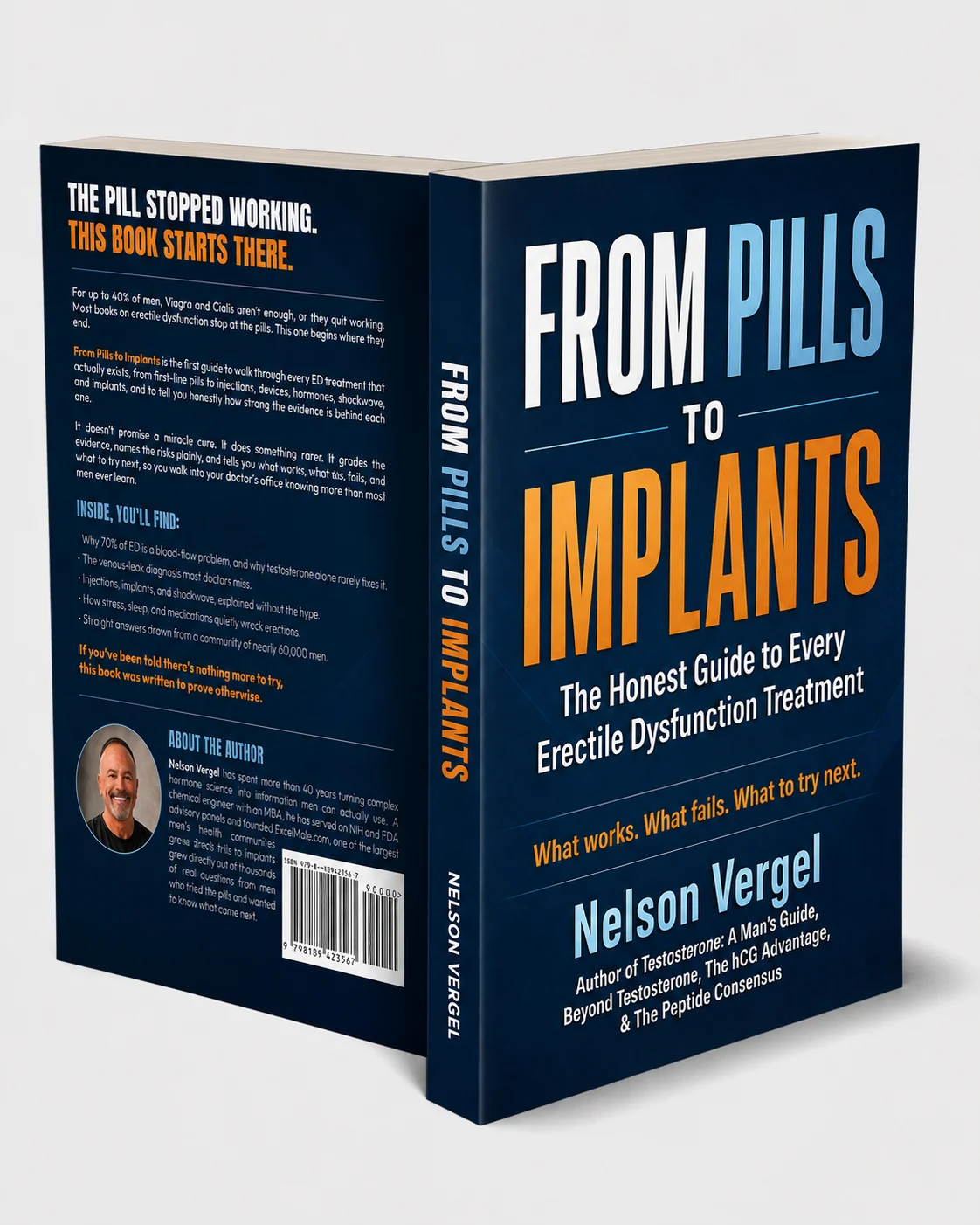
There is actually some evidence on how hCG while on anabolic steroids or high dose testosterone can preserve testicular function and make recovery faster after bodybuilders stopped AAS. I wrote a chapter about this in "The hCG Advantage" and also in "Beyond Testosterone".


Recovery After AAS and hCG Cessation


Key point:
hCG stimulates the testes directly through LH-like activity. AAS suppress hypothalamic GnRH and pituitary LH and FSH. After stopping both AAS and hCG, testicular stimulation declines while pituitary recovery often takes weeks to months.

Evidence from power athletes​

The most relevant study is Karila et al., involving Finnish power athletes who used large doses of AAS with hCG, generally 500 IU twice weekly.

  • Spermatogenesis was largely maintained during AAS use when hCG was included.
  • Sperm concentration began improving within approximately six weeks after the AAS cycle ended in lower-dose users.
  • At 1.5 months after cessation, mean sperm concentration was approximately 30 million/mL.
  • At six months, mean sperm concentration increased to approximately 77 million/mL.
  • Men with greater lifetime AAS exposure had lower testosterone, LH, and FSH at six months.
  • The study did not separately analyze men who stopped hCG while continuing AAS.
Reference: Karila T, Hovatta O, Seppala T. Concomitant abuse of anabolic androgenic steroids and human chorionic gonadotrophin impairs spermatogenesis in power athletes. International Journal of Sports Medicine. 2004;25:257-263. DOI: 10.1055/s-2004-819936.

What Beyond Testosterone reports​

  • Lower cumulative AAS users showed improvement after roughly six weeks.
  • Heavier users often remained suppressed at six months.
  • One group of 18 athletes maintained spermatogenesis while using hCG with AAS.
  • Sperm recovery generally took longer than testosterone or gonadotropin recovery.

Estimated recovery timeline after stopping both AAS and hCG​

Recovery markerApproximate timeframe
Loss of hCG-supported testicular stimulationSeveral days to a few weeks
Initial LH and FSH recoveryOften 2 to 12 weeks
More reliable LH, FSH, and testosterone recoveryOften 3 to 6 months
Sperm recoveryOften 4 to 12 months
Recovery after prolonged or high-dose AAS exposureSometimes 12 to 24 months, with incomplete recovery in some men

How hCG affects HPTA recovery​

  • hCG supports Leydig-cell testosterone production while pituitary LH remains suppressed.
  • hCG does not directly restore hypothalamic GnRH or pituitary LH and FSH secretion.
  • Continuing hCG after stopping AAS might maintain testicular testosterone temporarily, while LH and FSH remain low.
  • After hCG cessation, testosterone production depends increasingly on recovery of the hypothalamus and pituitary.
  • A sudden testosterone decline after stopping hCG does not necessarily indicate permanent testicular damage.

Factors associated with slower recovery​

  • Longer AAS exposure
  • Higher cumulative AAS dose
  • Use of nandrolone or other long-acting compounds
  • Older age
  • Low testosterone before AAS use
  • Previous cycles with incomplete recovery
  • Severe testicular atrophy or prolonged azoospermia

Monitoring recovery​

A practical monitoring plan includes:

  • Total and free testosterone
  • LH and FSH
  • Sensitive estradiol
  • Prolactin when clinically indicated
  • Testicular volume and symptoms
  • Semen analysis when fertility is the goal
Semen analysis is more useful than LH or FSH alone for determining whether spermatogenesis has returned. A semen analysis every three months provides a practical way to track progress.

Bottom line​

After stopping both AAS and hCG, many men show meaningful HPTA recovery within three to six months. Sperm recovery often takes four to twelve months and frequently lags behind testosterone recovery. Men with prolonged, high-dose AAS exposure require a longer observation period and face a higher risk of incomplete recovery.

The available studies do not provide a precise timeline for hCG cessation by itself. Most evidence examines AAS cessation, hCG use during AAS exposure, or hCG-based fertility treatment.
 

ExcelMale Newsletter Signup

Online statistics

Members online
3
Guests online
1,256
Total visitors
1,259

Latest posts

Members online

Beyond Testosterone Podcast

Back
Top