Creatine Monohydrate
Complete Guide: Pharmacokinetics, Pharmacodynamics, FAQs & Research
Compiled December 2025
Part 1: Pharmacokinetics & Pharmacodynamics
Pharmacokinetics
Absorption
Baseline absorption characteristics:
• Oral bioavailability of creatine monohydrate is approximately 80-100% when dissolved properly
• Peak plasma concentrations occur 1-2 hours post-ingestion
• Absorption occurs primarily in the small intestine via sodium-chloride dependent transporters (CRT1/SLC6A8)
Effect of food and macronutrients:
With carbohydrates: Co-ingestion with ~50-100g of simple carbohydrates increases muscle creatine uptake by 25-60% compared to creatine alone. The insulin spike enhances sodium-potassium ATPase activity, which drives the creatine transporter.
With protein: Combining creatine with ~50g protein produces similar enhancement to carbohydrates, likely through insulin and amino acid-mediated effects on cellular uptake.
With fats: High-fat meals slow gastric emptying and delay peak plasma concentrations but don't significantly reduce total absorption.
Fasted state: Absorption remains high, but muscle uptake may be 20-30% lower due to absence of insulin co-stimulation.
Distribution
• Volume of distribution: approximately 0.5 L/kg (distributes primarily to skeletal muscle, heart, brain, and testes)
• 95% of total body creatine resides in skeletal muscle
• Brain concentrations are much lower than muscle due to the blood-brain barrier limiting CRT1-mediated transport
• Plasma half-life: 3 hours (though tissue kinetics are more relevant)
Metabolism & Elimination
• Creatine undergoes non-enzymatic cyclization to creatinine at a rate of approximately 1.7% of total body pool daily
• Creatinine is renally excreted with clearance proportional to GFR
• No hepatic metabolism of significance
Pharmacodynamics
Mechanism of Action
Creatine serves as a substrate for creatine kinase, maintaining ATP regeneration during high-intensity, short-duration activities. In tissues:
1.
Phosphocreatine buffering: Rapidly regenerates ATP from ADP during energy demand
2.
Cellular hydration: Creatine is osmotically active, drawing water into cells, which may trigger anabolic signaling
3.
Neuroprotection: In brain tissue, supports mitochondrial function and may reduce oxidative stress
Tissue-Specific Effects
Skeletal muscle: Increases phosphocreatine stores by 10-40% depending on baseline status (responders vs. non-responders), enhancing power output and recovery.
Brain: More modest increases (5-15%) due to endogenous synthesis and limited transport. Effects more pronounced in vegetarians, sleep-deprived individuals, and during cognitive stress.
Cardiac muscle: Supports myocardial energetics, with some evidence of benefit in heart failure populations.
Temperature Considerations
Solubility and stability:
• Creatine monohydrate solubility increases with temperature: approximately 6g/L at 4°C, 14g/L at 20°C, and 34g/L at 50°C
• Degradation to creatinine accelerates in aqueous solution at higher temperatures and lower pH
• At room temperature in solution, degradation is minimal over 1-2 hours but becomes significant over 8+ hours
• In acidic environments (pH <4), degradation accelerates substantially
Optimizing Absorption by Compartment
For Maximum Muscle Uptake
• 3-5g creatine monohydrate dissolved in warm water (~40°C) stirred until clear
• Co-ingest with 30-50g simple carbohydrate (dextrose, fruit juice) or a mixed meal containing protein and carbohydrate
• Timing: post-workout may offer slight advantages due to increased blood flow and glucose uptake to muscle
• Loading phase (20g/day divided into 4 doses for 5-7 days) accelerates saturation but isn't necessary for long-term benefits
For Brain Uptake
This is more challenging given blood-brain barrier limitations. Strategies with theoretical or emerging support:
•
Higher doses: Some research suggests 10-20g/day may be needed to meaningfully increase brain creatine
•
Chronic supplementation: Brain uptake is slow; consistent daily dosing for 4+ weeks shows more reliable cognitive effects
•
Populations with enhanced response: Vegetarians/vegans, older adults, sleep-deprived individuals show more pronounced nootropic effects
Part 2: Creatine in Hot Coffee with Sugar
The Good
Sugar co-ingestion: The insulin spike from sugar enhances muscle creatine uptake. Even 10-20g sugar provides some benefit, though the 30-50g range shows more robust effects.
Improved solubility: Coffee temperatures (60-85°C) dramatically improve creatine dissolution. At these temperatures, you can fully dissolve 5g without the gritty residue common in cold water.
Caffeine interaction - performance: Despite older concerns, recent research indicates caffeine doesn't negate creatine's ergogenic effects when both are taken chronically.
The Concerns
Thermal degradation: This is the main issue. At coffee temperatures (70-85°C), creatine conversion to creatinine accelerates. However:
• At 80°C in neutral pH solution, degradation is approximately 1-2% per hour
• Coffee's near-neutral pH (around 5.0-5.5) slightly accelerates this
• If you drink the coffee within 10-15 minutes of mixing, losses are likely under 5%
Practical Verdict
Hot coffee with sugar is a viable creatine vehicle if:
• You mix and drink promptly (within 15 minutes)
• You stir thoroughly to ensure complete dissolution
• You're not adding it to extremely hot coffee straight from brewing—letting it cool slightly reduces degradation
The convenience factor may improve adherence, which matters more than marginal optimization.
Part 3: 20 Common Questions About Creatine
1. What is creatine and what does it do?
Creatine is a naturally occurring compound made from three amino acids (arginine, glycine, and methionine). About 95% of your body's creatine is stored in skeletal muscle as phosphocreatine. Its primary function is energy regeneration—during high-intensity activities, phosphocreatine donates a phosphate group to regenerate ATP, your cells' energy currency.
2. Is creatine a steroid?
No. Creatine has no structural or functional relationship to anabolic steroids. It doesn't interact with androgen receptors, doesn't require cycling, and isn't hormonal. It's closer to a vitamin or amino acid supplement.
3. What form of creatine is best?
Creatine monohydrate remains the gold standard. Despite numerous alternative forms marketed as superior, none have demonstrated better efficacy in peer-reviewed research. Creatine monohydrate has over 500 studies supporting its safety and effectiveness.
4. How much creatine should I take?
The standard maintenance dose is 3-5 grams daily. Larger individuals (over 200 lbs) may benefit from 5g, while smaller individuals can achieve saturation with 3g. There's no additional benefit to taking more once saturation is achieved.
5. Do I need to do a loading phase?
No, but it accelerates results. A loading phase (20g/day divided into 4 doses for 5-7 days) saturates muscle stores in about one week rather than 3-4 weeks. After loading, transition to the standard 3-5g maintenance dose.
6. When is the best time to take creatine?
Timing is less important than consistency. Some evidence suggests post-workout timing may offer slight advantages. Taking creatine with a meal containing carbohydrates and/or protein enhances uptake.
7. Should I take creatine on rest days?
Yes. Creatine works through saturation of muscle stores, not acute effects. Consistent daily dosing maintains optimal levels regardless of training schedule.
8. Does creatine cause water retention and bloating?
Creatine increases intracellular water retention (inside muscle cells), which is different from subcutaneous bloating. Initial weight gain of 1-3 kg is common and represents this cellular hydration plus stored creatine mass. Most users report muscles appearing fuller rather than softer.
9. Is creatine safe for the kidneys?
In healthy individuals, creatine supplementation at recommended doses shows no adverse effects on kidney function across dozens of studies. Note: creatinine levels will increase (a measurement artifact, not kidney impairment). Those with pre-existing kidney disease should consult their nephrologist.
10. Is creatine safe long-term?
Yes. Research spanning over 30 years, including studies lasting up to 5 years, consistently demonstrates safety at recommended doses. The ISSN position stand concludes creatine monohydrate is the most effective ergogenic supplement with an excellent safety profile.
11. Does creatine cause hair loss?
This concern stems from a single 2009 study showing increased DHT after loading. However, no subsequent studies have replicated this finding, and no research has directly demonstrated accelerated hair loss from creatine use.
12. Does creatine affect testosterone levels?
No. Multiple studies have measured testosterone during creatine supplementation and found no significant changes. Creatine works through cellular energy metabolism, not hormonal pathways.
13. Can women take creatine?
Absolutely. Creatine's mechanisms are identical in men and women. Women may actually have more to gain in relative terms, as they typically have lower baseline muscle creatine stores. Research demonstrates similar benefits in women.
14. Can older adults benefit from creatine?
Yes, potentially more so than younger adults. Older adults supplementing with creatine alongside resistance training show greater improvements in lean mass, strength, and functional capacity. Cognitive benefits are also more pronounced in older populations.
15. Does creatine have cognitive benefits?
Yes, particularly under stress conditions. Research demonstrates benefits in sleep deprivation, mental fatigue, aging, and vegetarian populations. Effects include improved working memory, processing speed, and mental endurance.
16. Should vegetarians and vegans take creatine?
Vegetarians and vegans are among the best candidates for creatine supplementation. They have lower baseline creatine stores and consistently show larger increases in muscle creatine and greater performance improvements from supplementation.
17. How should I take creatine for best absorption?
Dissolve powder in liquid (warm water improves solubility), co-ingest with carbohydrates and/or protein, take with meals, and drink adequate fluids. Perfect optimization matters less than consistent daily intake.
18. Does creatine interact with caffeine?
Early research suggested caffeine might negate creatine's benefits, but this has not held up. Recent studies show chronic co-ingestion doesn't diminish effectiveness. Caffeine's mild diuretic effect doesn't meaningfully impact creatine retention.
19. Are there any side effects of creatine?
At recommended doses, side effects are minimal:
•
Initial weight gain (1-3 kg): From increased intracellular water
•
GI discomfort: Usually only with loading doses; divide doses and take with food
•
Muscle cramping: Anecdotally reported but not supported by research
20. Who shouldn't take creatine?
Creatine is safe for most populations, but consult healthcare providers if you have:
• Pre-existing kidney disease
• Are taking nephrotoxic medications
• Rare creatine metabolism disorders
Part 4: Research Studies on Muscle & Strength Gains
Major Meta-Analyses & Systematic Reviews
1. Muscle Strength in Adults <50 Years (2024)
Citation: Nutrients. 2024 Oct;16(21):3665
Design: Systematic review and meta-analysis of 23 RCTs (509 participants)
Key Findings:
• Upper-body strength: +4.43 kg vs placebo (p < 0.001)
• Males showed significant gains in both upper and lower body
• Females showed no statistically significant gains (may reflect smaller sample size)
2. Upper- and Lower-Body Strength and Power (2025)
Citation: Nutrients. 2025 Aug;17(17):2748
Key Findings:
• Short-term (<8 weeks): WMD = 6.78 kg strength improvement
• Long-term (≥8 weeks): WMD = 2.15 kg (possible ceiling effect)
• Both males and females showed positive responses
3. Lean Body Mass by Age, Sex, Exercise Type (2022)
Citation: Nutrition. 2022 Jul;99-100:111644
Design: Meta-analysis of 35 RCTs; 1,192 participants
Key Findings:
• Overall LBM increase: +0.68 kg
• With resistance training: +1.10 kg
• Males: +1.46 kg
• Females: +0.29 kg (non-significant)
4. Older Adults: Lean Tissue Mass and Strength (2017)
Citation: Clin Interv Aging. 2017 Nov;12:1875-1885
Design: Meta-analysis of 22 RCTs; 721 older adults (age 57-70)
Key Findings:
• Lean tissue mass: +1.37 kg (p < 0.00001)
• Chest press strength: SMD = 0.35 (p = 0.0002)
• Leg press strength: SMD = 0.24 (p = 0.01)
Studies in Women
5. Older Females: Muscle Strength and Mass (2021)
Citation: Nutrients. 2021 Nov;13(11):3757
Design: Meta-analysis; 10 RCTs, 211 females ≥60 years
Key Findings:
• Upper-body strength: significantly increased (p = 0.04)
• Benefits more pronounced in programs lasting ≥24 weeks
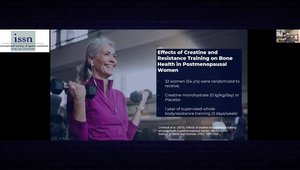
6. Postmenopausal Women: 2-Year RCT (2023)
Citation: Med Sci Sports Exerc. 2023 Sep;55(9):1659-1670
Key Findings:
• Lean tissue mass: increased with creatine
• Walking speed: significantly improved (p = 0.0008)
• No adverse kidney or liver events
7. Older Women: 12-Week RT (2012)
Citation: Eur J Appl Physiol. 2013 Apr;113(4):987-996
Design: 12-week RCT; 18 women (age 64.9 ± 5.0)
Key Findings:
• Fat-free mass: +3.2 kg greater than placebo
• Muscle mass: +2.8 kg greater than placebo
• 1-RM improvements: bench press +5.1%, knee extension +3.9%, biceps curl +8.8%
Studies in Men / Young Adults
8. Resistance-Trained Men: Regional Hypertrophy (2017)
Citation: Nutr Health. 2018 Sep;24(3):153-158
Design: RCT; 43 resistance-trained men (age 22.7 ± 3.0)
Key Findings:
• Upper limb hypertrophy: significantly greater with creatine (p < 0.001)
• Supports region-specific responses to creatine
9. Young Adults: 6-Week Intra-Workout Protocol (2020)
Citation: Nutrients. 2020 Jun;12(6):1832
Design: 6-week RCT; 22 young adults (age 26 ± 4-5)
Key Findings:
• Leg press, chest press, total body strength: all significantly increased
• Intra-workout supplementation was effective strategy
ISSN Position Stand (2017)
Citation: J Int Soc Sports Nutr. 2017 Jun;14:18
Key Positions:
• Creatine monohydrate is the most effective ergogenic supplement for high-intensity exercise and lean body mass
• Short and long-term supplementation (up to 30g/day for 5 years) is safe
• Benefits reported in both men and women
• Nearly 70% of ~500 peer-reviewed studies show significant improvement
Summary Table: Key Outcomes by Population
Population | Lean Mass | Upper Strength | Lower Strength | Notes |
| Young males |
+1.46 kg |
Significant ↑ |
Significant ↑ |
Most robust evidence |
Young females |
+0.29 kg (NS) |
Variable |
Variable |
Needs more research |
Older adults |
+1.37 kg |
+0.35 SMD |
+0.24 SMD |
Combined with RT |
Older females |
Variable |
Significant ↑ |
NS |
Better with ≥24 weeks |
NS = Not statistically significant; SMD = Standardized Mean Difference
Conclusions from the Evidence Base
•
Creatine monohydrate remains the gold standard — no alternative form has demonstrated superiority
•
Males show more robust responses than females — but females still benefit, particularly with longer interventions
•
Resistance training is essential — creatine without training produces minimal effects
•
Dose of 3-5g/day is effective — loading phase optional but accelerates saturation
•
Safe for long-term use — studies up to 5 years show no adverse effects
•
Older adults benefit significantly — important for sarcopenia prevention
•
More female-specific research needed — current evidence skewed toward male participants