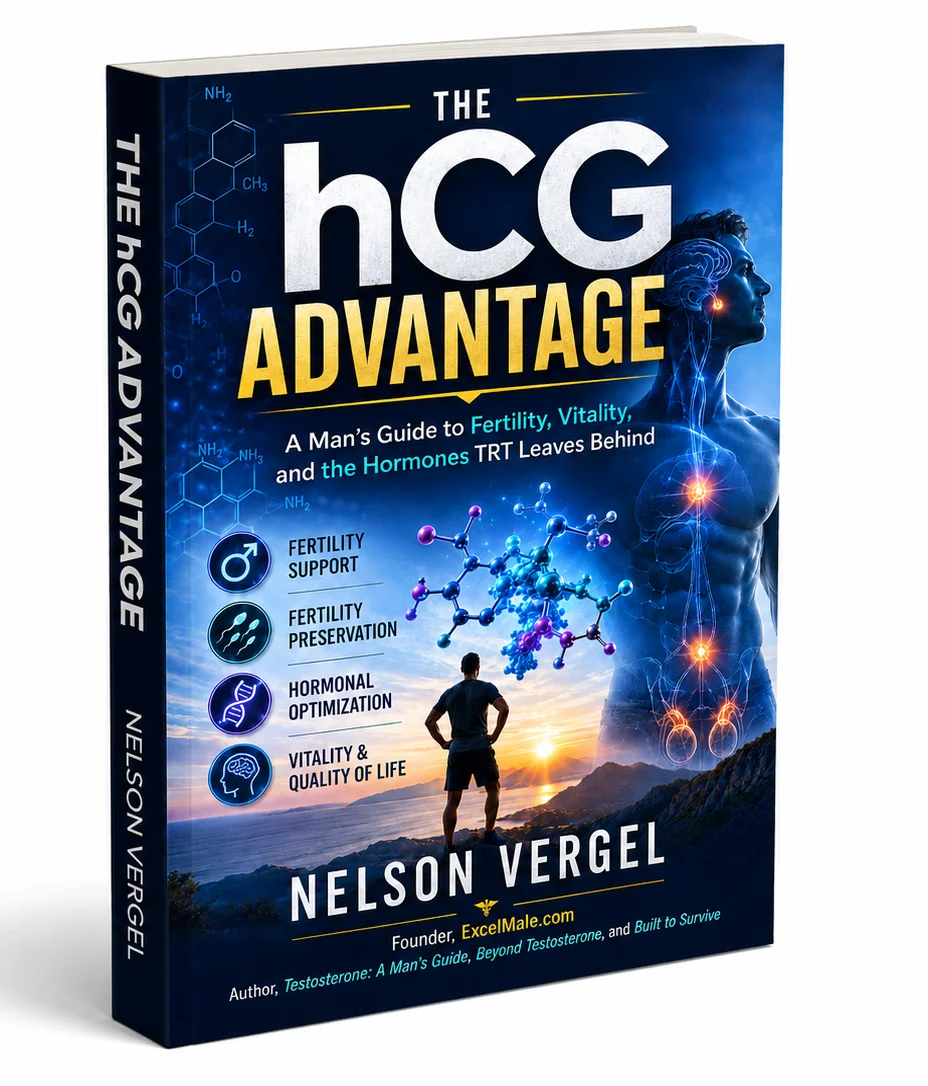

Trimix and hCG Access Program

Nelson Vergel

Founder, ExcelMale.com
  1. Are you currently on TRT but your Doctor won't prescribe HCG or Trimix?
  2. Would you like to consult by phone with a licensed Medical Doctor who is an expert in TRT?
  3. Do you have questions your primary doctor cannot answer?
Click on picture:
trimix hcg.webp


Nelson explains how to effectively use Human Chorionic Gonadotropin (HCG) in conjunction with Testosterone Replacement Therapy (TRT) to mitigate common side effects like reduced fertility and testicular atrophy, while also potentially improving libido and penile sensitivity.

Main Topic: Integrating HCG with TRT to preserve fertility, testicular size, and optimize sexual function, using a simplified injection protocol.

Key Points:

  • Understanding Testosterone Replacement Therapy (TRT):
    • Many men with low testosterone require TRT via prescription gels (e.g., Androgel) or injections (e.g., cypionate, enanthate).
    • Benefits: Replenishes testosterone to normal levels, improving overall well-being.
    • Disadvantages:
      • Shuts down the body's natural testosterone production.
      • Causes Leydig cells in the testicles to go dormant, leading to testicular atrophy (shrinking).
      • Impairs fertility by reducing sperm count.
      • Some men experience decreased sex drive and penis sensitivity over long-term use.
  • Introducing HCG as a Solution:
    • HCG is a legal, prescription-only peptide.
    • Despite negative publicity from the "HCG diet," it is effective in men for:
      • Improving fertility.
      • Restoring testicular size and appearance.
      • Boosting sex drive and penis sensitivity.
  • Traditional vs. Simplified HCG + TRT Protocols:
    • Traditional: Many clinics prescribe 2-3 HCG injections and 1-2 testosterone injections per week, totaling up to five injections, which can lead to poor adherence.
    • Simplified Protocol (Speaker's Method):
      • Designed for convenience, combining both products into a single syringe.
      • Requires only two injections per week.
      • Uses a small, 27-gauge, 0.5-inch insulin syringe.
      • Materials Needed: Testosterone (cypionate or enanthate), HCG powder, bacteriostatic water, 27-gauge insulin syringes, alcohol swabs.
      • HCG Preparation: An 11,000 IU HCG powder vial is reconstituted with 5.5 mL of bacteriostatic water, yielding a concentration of 2,000 IU per mL (CC).
      • Dosage (Example): For 100 mg of testosterone per week (divided into two injections), the speaker uses 50 mg (0.25 mL of a 200 mg/mL solution) and 500 IU HCG (0.25 mL of a 2,000 IU/mL solution) per injection, twice a week. Doses can be adjusted (e.g., 250 IU HCG twice a week).
      • Injection Process:
        1. Clean vial tops and injection site (e.g., shoulder).
        2. Draw 0.25 mL of testosterone (oil-based) into the syringe.
        3. Draw 0.25 mL of HCG (water-based) into the same syringe. (The products do not combine but save injection frequency).
        4. Inject intramuscularly or subcutaneously at a 90-degree angle. The small syringe minimizes discomfort.
      • Monitoring Results: Patients should notice fuller testicles and improved sex drive within 2-3 weeks to determine if the dosage is appropriate.
  • Conclusion: This simplified twice-weekly injection protocol aims to improve compliance and adherence to therapy, ensuring men receive the benefits of TRT while counteracting its negative side effects on fertility and sexual health.
 
Last edited:


Nelson provides an expert explanation of Human Chorionic Gonadotropin (HCG) in men, particularly its use in conjunction with Testosterone Replacement Therapy (TRT). The core argument is that HCG offers crucial benefits beyond preventing testicular atrophy, primarily by reactivating essential upstream hormone pathways that are suppressed by TRT alone.

Here’s a breakdown of the key points:

1. The Hormonal Cascade & Impact of TRT:

  • Natural Process: The pituitary gland produces Luteinizing Hormone (LH), which stimulates Leydig cells in the testicles to produce testosterone. Testosterone then converts to small amounts of estradiol and DHT (dihydrotestosterone). DHT influences sex drive, mood, and libido, but also hair loss and prostatic hyperplasia. Estradiol is linked to mood, cognitive function, bone strength, and can cause gynecomastia in excess.
  • TRT's Shutdown Effect: When exogenous testosterone is introduced (via injections, gels, etc.), the body detects sufficient testosterone. This triggers a negative feedback loop that shuts down the pituitary's production of LH (and FSH).
  • Consequences of LH Shutdown:
    • Testicular Atrophy: Leydig cells become dormant and shrink, leading to testicular atrophy. This is reversible.
    • Decreased Fertility: LH and FSH shutdown severely reduces sperm production, often to zero, affecting fertility.
    • Suppression of Upstream Hormones: LH is crucial for the uptake of cholesterol into cells to produce hormones and for the conversion of cholesterol to pregnenolone, and subsequently to progesterone. Without LH, these vital "upstream" hormones (pregnenolone, progesterone, and their downstream products like DHEA) drop to very low or zero levels, potentially leading to long-term issues. These hormones have recognized neurocognitive benefits.
2. How HCG Counteracts TRT's Side Effects:

  • Mimics LH: HCG acts like LH, even though it's not detected as LH in blood tests. It stimulates Leydig cells directly.
  • Prevents Testicular Atrophy: By stimulating Leydig cells, HCG keeps them active and "plumped," preventing or reversing testicular shrinkage.
  • Maintains Fertility: A study from Baylor College of Medicine (Dr. Lipschultz's group) demonstrated that combining HCG with testosterone significantly improves sperm production and fertility in men on TRT, preventing the shutdown of FSH and LH activity crucial for spermatogenesis.
  • Reactivates Upstream Hormones: This is a lesser-known but critical benefit. HCG reactivates the conversion pathways from cholesterol to pregnenolone and progesterone, restoring these hormones to healthy levels. This "backfilling" of hormone pathways ensures the body produces a full spectrum of necessary hormones, potentially enhancing neurocognitive function and overall well-being.
  • Anecdotal Benefits: Many users, including the speaker, report enhanced sex drive and mood when HCG is combined with TRT, even though scientific studies specifically on these aspects are limited.
3. HCG Dosage and Protocols:

  • Typical TRT Dose: Many men on TRT use 100-200 mg of testosterone per week, often split into two injections to maintain more constant blood levels.
  • HCG Dosage:
    • For general well-being/atrophy prevention: 350-500 IU of HCG, 2-3 times per week, is commonly used to keep Leydig cells active and reactivate upstream hormones.
    • For fertility (as per Baylor study): 500 IU of HCG, 3 times per week, combined with testosterone injections (100-200 mg/week) or gels.
  • Speaker's Personal Protocol: The speaker combines 50 mg of testosterone and 500 IU of HCG in the same syringe, injecting twice a week, citing convenience and good personal results.
4. Need for Further Research:

  • Nelson emphasizes the importance of more scientific data to fully prove HCG's broader benefits (beyond fertility and testicular size) to educate and encourage more doctors to prescribe it alongside TRT.
 
Last edited:

ExcelMale Newsletter Signup

Online statistics

Members online
4
Guests online
389
Total visitors
393

Latest posts

Beyond Testosterone Podcast

Back
Top