
madman
Super Moderator
* spanning post-mortem human brain analysis and mouse models—identified that lithium levels are significantly lower in the brains of those with cognitive impairment.
Dr. Manson
* I want to emphasize that these findings need to be confirmed by a rigorous randomized trial before lithium orotate should be considered ready for prime time. A research group in collaboration with Dr. Yankner will soon be launching such a large-scale human trial and appreciate the philanthropic support that has made this possible.
Is lithium orotate the next breakthrough in Alzheimer’s disease prevention? JoAnn Manson, MD, discusses a novel study published in Nature that suggests a promising role for this specific mineral formulation in reducing dementia risk.
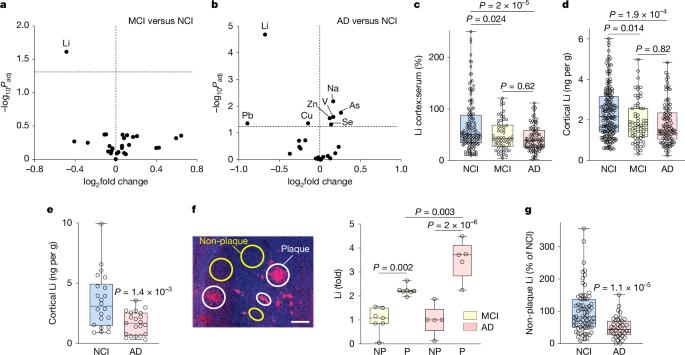
In this clinical update, JoAnn Manson, MD, explores research led by Bruce Yankner, MD, and colleagues at Harvard Medical School. The team’s multi-layered investigation—spanning post-mortem human brain analysis and mouse models—identified that lithium levels are significantly lower in the brains of those with cognitive impairment. Crucially, the researchers found that amyloid-beta plaques actually trap lithium, leading to a localized deficiency. While traditional lithium salts like lithium carbonate can be toxic at high doses, lithium orotate appears to avoid the "amyloid trap," effectively restoring lithium availability and reversing pathological changes in animal models. Although these results are a major step forward, JoAnn Manson, MD, emphasizes that large-scale, randomized human trials are necessary before lithium orotate can be recommended for routine clinical use.
Chapters
00:00 - Introduction to Lithium Orotate Research
00:41 - The Need for Rigorous Human Trials
01:16 - Post-Mortem Brain Tissue Analysis Results
02:20 - Causation Studies in Mouse Models
03:00 - Unique Properties of Lithium Orotate
03:48 - Limitations of Previous Lithium Research
04:31 - Future Directions for Dementia Prevention
 www.nature.com
Dr. Manson
* I want to emphasize that these findings need to be confirmed by a rigorous randomized trial before lithium orotate should be considered ready for prime time. A research group in collaboration with Dr. Yankner will soon be launching such a large-scale human trial and appreciate the philanthropic support that has made this possible.
Is lithium orotate the next breakthrough in Alzheimer’s disease prevention? JoAnn Manson, MD, discusses a novel study published in Nature that suggests a promising role for this specific mineral formulation in reducing dementia risk.
In this clinical update, JoAnn Manson, MD, explores research led by Bruce Yankner, MD, and colleagues at Harvard Medical School. The team’s multi-layered investigation—spanning post-mortem human brain analysis and mouse models—identified that lithium levels are significantly lower in the brains of those with cognitive impairment. Crucially, the researchers found that amyloid-beta plaques actually trap lithium, leading to a localized deficiency. While traditional lithium salts like lithium carbonate can be toxic at high doses, lithium orotate appears to avoid the "amyloid trap," effectively restoring lithium availability and reversing pathological changes in animal models. Although these results are a major step forward, JoAnn Manson, MD, emphasizes that large-scale, randomized human trials are necessary before lithium orotate can be recommended for routine clinical use.
Chapters
00:00 - Introduction to Lithium Orotate Research
00:41 - The Need for Rigorous Human Trials
01:16 - Post-Mortem Brain Tissue Analysis Results
02:20 - Causation Studies in Mouse Models
03:00 - Unique Properties of Lithium Orotate
03:48 - Limitations of Previous Lithium Research
04:31 - Future Directions for Dementia Prevention
Lithium deficiency and the onset of Alzheimer’s disease - Nature
Lithium has an essential role in the brain and is deficient early in Alzheimer’s disease, which can be recapitulated in mice and treated with a novel lithium salt that restores the physiological level.
www.nature.com