Does anyone here take Buspar and have it increase libido?
I have read that in some people with some level of anxiety that it increased libido.
I read that it is mild and not addictive like benzos.
----------------------
Background:
To understand HSDD, one must look at the Dual Control Model of sexual response, a staple of modern sexology that describes the brain’s "gas and brakes" system. While sexual excitation is driven by dopamine and oxytocin, inhibition is mediated by serotonin. SSRIs, by flooding the synapse with serotonin, essentially lock the "emotional brakes" in the park position. Now, an old-school anxiolytic is emerging as a "brake-release" mechanism. Buspirone, a drug originally designed for generalized anxiety, is increasingly becoming the off-label hope for reclaiming desire without sacrificing mental equilibrium.
The data supports this "human impact" vividly. In a landmark placebo-controlled trial, 58% of subjects in the buspirone add-on group reported significant improvement in sexual function, compared to just 30% for the placebo group. For patients, the relief isn't just statistical—it’s visceral.
"I got put on buspirone for libido problems and it came back like it was in my teenage years within a few days... it made me feel human again," notes Kat, a patient reviewer. This sentiment is echoed by Jay, who found the relief gender-neutral: "My sex drive not only came back but it was better than before... Whoever invented the stuff deserves to be a billionaire."
The biological logic hinges on a counter-intuitive delay. Sublingual testosterone increases the brain's "pre-attentional bias" for sexual stimuli, but it carries a four-hour lag before its effects on arousal peak. Conversely, buspirone reaches its maximum concentration (T-max) in approximately 60 minutes. To synchronize these effects, the buspirone must be administered roughly 2 to 3 hours after the testosterone. This ensures that the peak "brake-release" of the buspirone coincides exactly with the "gas" of the testosterone, effectively bypassing inhibitory factors that would otherwise block the brain's ability to process arousal.
This failure provides a profound insight into the biology of desire. For women in the Colombian study, the lack of desire wasn't necessarily caused by "too much brake" (serotonergic inhibition), but perhaps "not enough gas" (a lack of excitatory signaling). In the larger landscape of sexual medicine—occupied by newer "on-demand" drugs like Flibanserin or Bremelanotide—this underscores that HSDD is not a monolith. If the root cause isn't a neurochemical blockage, buspirone has nothing to reset.
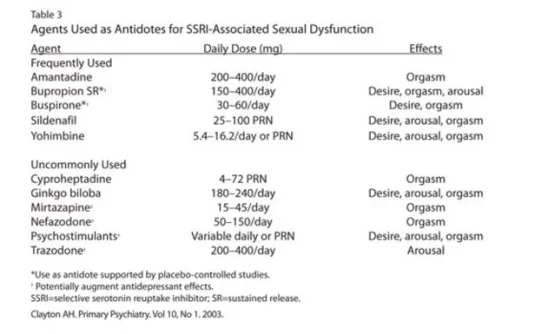
Across both genders, the benefits are highly dose-dependent. Clinical trials, such as the Landén study, utilized a flexible range of 20–60 mg, with a mean daily dose of 48.5 mg identified as the "sweet spot" for reversing dysfunction. This precise dosing is critical; too little fails to release the brakes, while too much can lead to side effects like nausea or tachycardia.
As we continue to map the neurotransmitters that govern our most private moments, we face a new societal question: If we can medicate our anxiety with such precision, should we be just as proactive in medicating the biological barriers to our intimacy? Reclaiming the bedroom may finally be recognized not as a luxury, but as a fundamental component of the human recovery process.
I have read that in some people with some level of anxiety that it increased libido.
I read that it is mild and not addictive like benzos.
----------------------
Background:
The Anxiety Pill Moonlighting as a Libido Savior: Inside the New Science of HSDD
For many navigating the labyrinth of modern mental health, the path to stability involves a cruel, unspoken trade-off. It is often described as the "choice between sanity and sex." Selective Serotonin Reuptake Inhibitors (SSRIs) are clinical lifesavers for anxiety and depression, yet they frequently leave a trail of collateral neurochemical damage in the bedroom. This condition—Hypoactive Sexual Desire Disorder (HSDD)—is far more complex than a simple "low mood."To understand HSDD, one must look at the Dual Control Model of sexual response, a staple of modern sexology that describes the brain’s "gas and brakes" system. While sexual excitation is driven by dopamine and oxytocin, inhibition is mediated by serotonin. SSRIs, by flooding the synapse with serotonin, essentially lock the "emotional brakes" in the park position. Now, an old-school anxiolytic is emerging as a "brake-release" mechanism. Buspirone, a drug originally designed for generalized anxiety, is increasingly becoming the off-label hope for reclaiming desire without sacrificing mental equilibrium.
1. The "Secret Weapon" for the SSRI Dead Zone
For those whose libido has "tanked" due to antidepressants, buspirone acts as a vital neurochemical intervention. Unlike most psychiatric medications that further dull the senses, buspirone is a 5-HT1a agonist. This allows it to modulate the very pathways SSRIs disrupt, effectively acting as a secondary treatment to "wake up" the brain's receptivity to intimacy.The data supports this "human impact" vividly. In a landmark placebo-controlled trial, 58% of subjects in the buspirone add-on group reported significant improvement in sexual function, compared to just 30% for the placebo group. For patients, the relief isn't just statistical—it’s visceral.
"I got put on buspirone for libido problems and it came back like it was in my teenage years within a few days... it made me feel human again," notes Kat, a patient reviewer. This sentiment is echoed by Jay, who found the relief gender-neutral: "My sex drive not only came back but it was better than before... Whoever invented the stuff deserves to be a billionaire."
2. Pharmacokinetic Synchronization: The 4-Hour Testosterone Window
Perhaps the most sophisticated application of buspirone is found in "Lybridos," a combination therapy that pairs the drug with sublingual testosterone. This isn't a simple "pill-stacking" exercise; it is a meticulously timed pharmacokinetic dance.The biological logic hinges on a counter-intuitive delay. Sublingual testosterone increases the brain's "pre-attentional bias" for sexual stimuli, but it carries a four-hour lag before its effects on arousal peak. Conversely, buspirone reaches its maximum concentration (T-max) in approximately 60 minutes. To synchronize these effects, the buspirone must be administered roughly 2 to 3 hours after the testosterone. This ensures that the peak "brake-release" of the buspirone coincides exactly with the "gas" of the testosterone, effectively bypassing inhibitory factors that would otherwise block the brain's ability to process arousal.
3. The Paradox of the "Pure" HSDD Failure
Despite its success in SSRI users, buspirone reveals a stark clinical paradox: it often fails those with "pure" HSDD. A clinical trial led by De La Hoz et al. in Colombia found a staggering 85% to 90% therapeutic failure rate among non-depressed women.This failure provides a profound insight into the biology of desire. For women in the Colombian study, the lack of desire wasn't necessarily caused by "too much brake" (serotonergic inhibition), but perhaps "not enough gas" (a lack of excitatory signaling). In the larger landscape of sexual medicine—occupied by newer "on-demand" drugs like Flibanserin or Bremelanotide—this underscores that HSDD is not a monolith. If the root cause isn't a neurochemical blockage, buspirone has nothing to reset.
4. A Brain Reset, Not a "Blue Pill"
It is a common mistake to conflate buspirone with "The Blue Pill." While medications like Viagra are hydraulic—focusing on blood flow and physical mechanics—buspirone is purely cognitive. It is a brain reset rather than a physical stimulant.- Targeted Agonism: By targeting 5-HT1a receptors, buspirone lowers the neurochemical "brakes" while indirectly supporting the excitatory work of dopamine and oxytocin.
- Neurochemical Precision: Unlike benzodiazepines (such as Xanax), buspirone does not influence GABA receptors, making it a non-addictive alternative that treats the mental barriers to intimacy without sedation.
- Sensitivity over Stimulation: It increases the brain's motivational sensitivity to sexual stimuli, allowing the mind to actually notice and want intimacy again.
5. The Clinical Paradox of Gender and Dosing
The recovery data for buspirone shows intriguing gender-specific nuances. Consensus guidelines from ICSM 2024 suggest that buspirone may be more effective for treating SSRI-induced sexual side effects in women than in men. However, the data for men remains robust: approximately 69% of men reported significant improvement, specifically citing firmer erections and the restoration of orgasmic sensation after SSRI-induced "numbness."Across both genders, the benefits are highly dose-dependent. Clinical trials, such as the Landén study, utilized a flexible range of 20–60 mg, with a mean daily dose of 48.5 mg identified as the "sweet spot" for reversing dysfunction. This precise dosing is critical; too little fails to release the brakes, while too much can lead to side effects like nausea or tachycardia.
Conclusion: The Future of On-Demand Intimacy
Buspirone is not a "magic sex pill," but it is a major breakthrough in our understanding of the brain's "stop and go" signals. It serves as a bridge for those trapped in the vacuum between mental health stability and the biological right to intimacy.As we continue to map the neurotransmitters that govern our most private moments, we face a new societal question: If we can medicate our anxiety with such precision, should we be just as proactive in medicating the biological barriers to our intimacy? Reclaiming the bedroom may finally be recognized not as a luxury, but as a fundamental component of the human recovery process.
Last edited by a moderator: