


madman
Super Moderator
* Fertility preservation remains an important consideration in the management of hypogonadal men. While exogenous testosterone therapy effectively alleviates symptoms, it suppresses the HPG axis and impairs spermatogenesis. Alternative therapeutic strategies—including short- acting formulations (intranasal and oral testosterone undecanoate), SERMs such as enclomiphene citrate, and concomitant administration of low-dose hCG—are under active investigation as potential options for maintaining or restoring fertility potential. Continued investigation and long-term outcome data are needed to better define the role of these approaches in clinical practice, particularly regarding semen parameters and pregnancy outcomes.
Abstract
The rising prevalence of testosterone deficiency has led to increased use of exogenous testosterone therapy, including among men desiring fertility. Conventional testosterone replacement therapies (TRT) restore serum testosterone but suppress gonadotropins, resulting in impaired spermatogenesis. Consequently, newer approaches aim to normalize testosterone levels while preserving fertility potential. Intranasal testosterone provides short-acting, pulsatile testosterone delivery that mimics physiologic diurnal variation. Studies demonstrate normalization of serum testosterone while maintaining follicle-stimulating hormone (FSH) and luteinizing hormone (LH) within reference ranges, supporting the potential for preserved spermatogenesis. Similarly, oral testosterone undecanoate formulations offer noninvasive administration and short-acting pharmacokinetics. Clinical data show maintenance of FSH and LH within normal limits, albeit reduced from baseline, suggesting possible fertility preservation— though data on semen parameters remain limited. Concomitant administration of low-dose human chorionic gonadotropin (hCG) with exogenous testosterone has been shown to sustain intratesticular testosterone (ITT) and spermatogenesis. Multiple studies demonstrate that hCG maintains sperm production even with full gonadotropin suppression from TRT. Finally, enclomiphene citrate, a purified trans-isomer of clomiphene, stimulates the hypothalamic-pituitary-gonadal (HPG) axis, increasing endogenous testosterone while maintaining spermatogenesis. This paper provides an updated overview of these evolving modalities and advances since our 2013 publication, highlighting short-acting testosterone delivery, concomitant gonadotropin support, and selective estrogen receptor modulation. Continued research with larger, long-term studies is essential to confirm their safety, efficacy, and fertility outcome
The objective of this review is to provide an updated overview of the current strategies aimed at increasing serum testosterone while preserving spermatogenesis. Since our 2013 publication, significant progress has been made in this area. Notably, recent research within the field of male infertility has focused on identifying methods to continue exogenous testosterone therapy while maintaining the hormonal and semen parameters necessary for fertility. The primary modalities covered in this review include intranasal testosterone, oral testosterone, the concomitant use of testosterone with low-dose hCG, and enclomiphene citrate. This review explores these evolving approaches to maintaining male fertility in the context of ongoing TRT. Additionally, we discuss the role of enclomiphene citrate— the trans-isomer of CC—which offers a more selective hypothalamic-pituitary-gonadal (HPG) axis stimulation than racemic CC.
Intranasal testosterone
A proposed benefit is that it has been shown to increase testosterone while maintaining FSH, LH, and semen parameters within the normal range.
It is hypothesized that the short-acting nature of Natesto with its two to three-times daily dosing, more closely mimics the physiological pattern of testosterone secretion compared to long-acting testosterone supplementation. Because serum testosterone levels return to near baseline between doses, this may help preserve the natural diurnal rhythm of testosterone production. As a result, pulsatile secretion of gonadotropins may be maintained, thereby preserving spermatogenesis (26,31-33).
Limited short-term data with Natesto suggest potential for maintaining gonadotropin levels, but its long-term effects on spermatogenesis remain uncertain, underscoring the need for close monitoring.
* Given the lack of long-term data, the AUA does not recommend the use of nasal testosterone in men interested in current or future fertility (24).
Table 1 summarizes the clinical studies evaluating intranasal testosterone.
Oral testosterone
Similar to intranasal testosterone, oral testosterone is short-acting and is therefore hypothesized to preserve spermatogenesis.
Oral testosterone has been shown to maintain FSH and LH within normal reference ranges, albeit decreased from baseline.
* Given its short-acting pharmacokinetics, oral testosterone may have the potential to preserve spermatogenesis; however, there are currently no published data evaluating semen parameters in hypogonadal men treated with oral testosterone. The AUA guidelines note that clinical trials are underway to develop orally administered exogenous testosterone agents; however, they do not provide specific recommendations regarding their use (1).
Table 2 summarizes the clinical studies evaluating oral testosterone.
Testosterone with hCG
Concomitant TRT with low-dose hCG has been demonstrated to preserve spermatogenesis.
Presumably, hCG increases ITT concentration despite exogenous testosterone through direct stimulation of Leydig cells. Maintaining baseline ITT concentrations in men with fully suppressed gonadotropins secondary to exogenous testosterone requires a significantly lower dose of hCG than the doses typically administered for treating hypogonadotropic hypogonadism-related infertility.
Regarding recommended regimens, Lee and Ramasamy suggest that for men planning for pregnancy within 6–12 months, TRT may be continued with 500 IU of hCG every other day (42). For those planning conception beyond 12 months, they recommend continuing TRT with intermittent cessation every 6 months, during which patients receive 3,000 IU of hCG every other day for four weeks. For men not seeking fertility but wishing to preserve testicular volume, continued TRT with 1,500 IU of hCG once weekly is advised in their publication.
* The AUA guidelines recommended against prescribing testosterone in men who desire current or future fertility. Additionally, the AUA infertility guidelines note that while some studies suggest spermatogenesis may be preserved by adding hCG to exogenous testosterone in men desiring future fertility (>6 months), the current evidence is insufficient to support this approach (24).
Table 3 summarizes the clinical studies evaluating testosterone with hCG.
Enclomiphene citrate
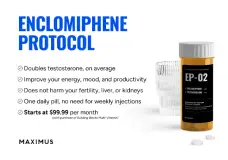
Although not FDA approved, enclomiphene citrate can be obtained through compounding pharmacies for use in men with hypogonadism. Enclomiphene citrate (the trans-isomer of CC) has effects consistent with estrogen antagonism whereas zuclomiphene (the cis-isomer) often acts as an agonist (43). Generic CC contains both isomers in variable proportions, whereas enclomiphene represents the purified androgenic component.
* Overall, enclomiphene citrate consistently increased serum LH and FSH and restored normal levels of serum TT. Treatment with enclomiphene citrate maintained sperm concentrations in the normal range. The effects on TT were also seen with testosterone replacement via testosterone gel but sperm counts were not maintained.
Table 4 summarizes the clinical studies evaluating enclomiphene citrate.
Table 5 highlights the advantages and disadvantages of all the medications highlighted in this review article.
Improving spermatogenesis in individuals with a history of anabolic steroid use
Anabolic-androgenic steroids (AAS) share a similar mechanism of action with testosterone (48). Men with a history of anabolic steroid or exogenous testosterone use frequently present with suppressed gonadotropins and impaired spermatogenesis due to prolonged HPG axis suppression. Conventionally, clinicians have addressed androgen-induced suppression by discontinuing exogenous testosterone to allow for endogenous restoration of spermatogenesis. However, recovery of endogenous fertility is often slow and accompanied by the sudden recurrence of hypogonadal symptoms. Data suggest that increasing age and longer duration of testosterone therapy are associated with delayed or incomplete recovery of spermatogenesis after testosterone therapy discontinuation (49).
* Taken together, these data illustrate the growing potential of gonadotropin-based therapies to preserve or restore fertility in hypogonadal men, even those continuing exogenous androgen use. Continued investigation will be essential to optimize dosing strategies, assess long- term reproductive outcomes, and define the role of these interventions within the broader landscape of TRT. It is important to note that, consistent with current clinical guidelines, discontinuation of testosterone therapy or anabolic steroid use remains the standard recommendation for men desiring fertility.
Conclusion
Fertility preservation remains an important consideration in the management of hypogonadal men. While exogenous testosterone therapy effectively alleviates symptoms, it suppresses the HPG axis and impairs spermatogenesis. Alternative therapeutic strategies—including short- acting formulations (intranasal and oral testosterone undecanoate), SERMs such as enclomiphene citrate, and concomitant administration of low-dose hCG—are under active investigation as potential options for maintaining or restoring fertility potential. Continued investigation and long-term outcome data are needed to better define the role of these approaches in clinical practice, particularly regarding semen parameters and pregnancy outcomes. As this review was narrative in nature rather than a systematic analysis, the potential for selection bias should be acknowledged. Clinicians should continue to assess fertility goals in all men prior to initiating TRT.
Abstract
The rising prevalence of testosterone deficiency has led to increased use of exogenous testosterone therapy, including among men desiring fertility. Conventional testosterone replacement therapies (TRT) restore serum testosterone but suppress gonadotropins, resulting in impaired spermatogenesis. Consequently, newer approaches aim to normalize testosterone levels while preserving fertility potential. Intranasal testosterone provides short-acting, pulsatile testosterone delivery that mimics physiologic diurnal variation. Studies demonstrate normalization of serum testosterone while maintaining follicle-stimulating hormone (FSH) and luteinizing hormone (LH) within reference ranges, supporting the potential for preserved spermatogenesis. Similarly, oral testosterone undecanoate formulations offer noninvasive administration and short-acting pharmacokinetics. Clinical data show maintenance of FSH and LH within normal limits, albeit reduced from baseline, suggesting possible fertility preservation— though data on semen parameters remain limited. Concomitant administration of low-dose human chorionic gonadotropin (hCG) with exogenous testosterone has been shown to sustain intratesticular testosterone (ITT) and spermatogenesis. Multiple studies demonstrate that hCG maintains sperm production even with full gonadotropin suppression from TRT. Finally, enclomiphene citrate, a purified trans-isomer of clomiphene, stimulates the hypothalamic-pituitary-gonadal (HPG) axis, increasing endogenous testosterone while maintaining spermatogenesis. This paper provides an updated overview of these evolving modalities and advances since our 2013 publication, highlighting short-acting testosterone delivery, concomitant gonadotropin support, and selective estrogen receptor modulation. Continued research with larger, long-term studies is essential to confirm their safety, efficacy, and fertility outcome
The objective of this review is to provide an updated overview of the current strategies aimed at increasing serum testosterone while preserving spermatogenesis. Since our 2013 publication, significant progress has been made in this area. Notably, recent research within the field of male infertility has focused on identifying methods to continue exogenous testosterone therapy while maintaining the hormonal and semen parameters necessary for fertility. The primary modalities covered in this review include intranasal testosterone, oral testosterone, the concomitant use of testosterone with low-dose hCG, and enclomiphene citrate. This review explores these evolving approaches to maintaining male fertility in the context of ongoing TRT. Additionally, we discuss the role of enclomiphene citrate— the trans-isomer of CC—which offers a more selective hypothalamic-pituitary-gonadal (HPG) axis stimulation than racemic CC.
Intranasal testosterone
A proposed benefit is that it has been shown to increase testosterone while maintaining FSH, LH, and semen parameters within the normal range.
It is hypothesized that the short-acting nature of Natesto with its two to three-times daily dosing, more closely mimics the physiological pattern of testosterone secretion compared to long-acting testosterone supplementation. Because serum testosterone levels return to near baseline between doses, this may help preserve the natural diurnal rhythm of testosterone production. As a result, pulsatile secretion of gonadotropins may be maintained, thereby preserving spermatogenesis (26,31-33).
Limited short-term data with Natesto suggest potential for maintaining gonadotropin levels, but its long-term effects on spermatogenesis remain uncertain, underscoring the need for close monitoring.
* Given the lack of long-term data, the AUA does not recommend the use of nasal testosterone in men interested in current or future fertility (24).
Table 1 summarizes the clinical studies evaluating intranasal testosterone.
Oral testosterone
Similar to intranasal testosterone, oral testosterone is short-acting and is therefore hypothesized to preserve spermatogenesis.
Oral testosterone has been shown to maintain FSH and LH within normal reference ranges, albeit decreased from baseline.
* Given its short-acting pharmacokinetics, oral testosterone may have the potential to preserve spermatogenesis; however, there are currently no published data evaluating semen parameters in hypogonadal men treated with oral testosterone. The AUA guidelines note that clinical trials are underway to develop orally administered exogenous testosterone agents; however, they do not provide specific recommendations regarding their use (1).
Table 2 summarizes the clinical studies evaluating oral testosterone.
Testosterone with hCG
Concomitant TRT with low-dose hCG has been demonstrated to preserve spermatogenesis.
Presumably, hCG increases ITT concentration despite exogenous testosterone through direct stimulation of Leydig cells. Maintaining baseline ITT concentrations in men with fully suppressed gonadotropins secondary to exogenous testosterone requires a significantly lower dose of hCG than the doses typically administered for treating hypogonadotropic hypogonadism-related infertility.
Regarding recommended regimens, Lee and Ramasamy suggest that for men planning for pregnancy within 6–12 months, TRT may be continued with 500 IU of hCG every other day (42). For those planning conception beyond 12 months, they recommend continuing TRT with intermittent cessation every 6 months, during which patients receive 3,000 IU of hCG every other day for four weeks. For men not seeking fertility but wishing to preserve testicular volume, continued TRT with 1,500 IU of hCG once weekly is advised in their publication.
* The AUA guidelines recommended against prescribing testosterone in men who desire current or future fertility. Additionally, the AUA infertility guidelines note that while some studies suggest spermatogenesis may be preserved by adding hCG to exogenous testosterone in men desiring future fertility (>6 months), the current evidence is insufficient to support this approach (24).
Table 3 summarizes the clinical studies evaluating testosterone with hCG.
Enclomiphene citrate
Although not FDA approved, enclomiphene citrate can be obtained through compounding pharmacies for use in men with hypogonadism. Enclomiphene citrate (the trans-isomer of CC) has effects consistent with estrogen antagonism whereas zuclomiphene (the cis-isomer) often acts as an agonist (43). Generic CC contains both isomers in variable proportions, whereas enclomiphene represents the purified androgenic component.
* Overall, enclomiphene citrate consistently increased serum LH and FSH and restored normal levels of serum TT. Treatment with enclomiphene citrate maintained sperm concentrations in the normal range. The effects on TT were also seen with testosterone replacement via testosterone gel but sperm counts were not maintained.
Table 4 summarizes the clinical studies evaluating enclomiphene citrate.
Table 5 highlights the advantages and disadvantages of all the medications highlighted in this review article.
Improving spermatogenesis in individuals with a history of anabolic steroid use
Anabolic-androgenic steroids (AAS) share a similar mechanism of action with testosterone (48). Men with a history of anabolic steroid or exogenous testosterone use frequently present with suppressed gonadotropins and impaired spermatogenesis due to prolonged HPG axis suppression. Conventionally, clinicians have addressed androgen-induced suppression by discontinuing exogenous testosterone to allow for endogenous restoration of spermatogenesis. However, recovery of endogenous fertility is often slow and accompanied by the sudden recurrence of hypogonadal symptoms. Data suggest that increasing age and longer duration of testosterone therapy are associated with delayed or incomplete recovery of spermatogenesis after testosterone therapy discontinuation (49).
* Taken together, these data illustrate the growing potential of gonadotropin-based therapies to preserve or restore fertility in hypogonadal men, even those continuing exogenous androgen use. Continued investigation will be essential to optimize dosing strategies, assess long- term reproductive outcomes, and define the role of these interventions within the broader landscape of TRT. It is important to note that, consistent with current clinical guidelines, discontinuation of testosterone therapy or anabolic steroid use remains the standard recommendation for men desiring fertility.
Conclusion
Fertility preservation remains an important consideration in the management of hypogonadal men. While exogenous testosterone therapy effectively alleviates symptoms, it suppresses the HPG axis and impairs spermatogenesis. Alternative therapeutic strategies—including short- acting formulations (intranasal and oral testosterone undecanoate), SERMs such as enclomiphene citrate, and concomitant administration of low-dose hCG—are under active investigation as potential options for maintaining or restoring fertility potential. Continued investigation and long-term outcome data are needed to better define the role of these approaches in clinical practice, particularly regarding semen parameters and pregnancy outcomes. As this review was narrative in nature rather than a systematic analysis, the potential for selection bias should be acknowledged. Clinicians should continue to assess fertility goals in all men prior to initiating TRT.