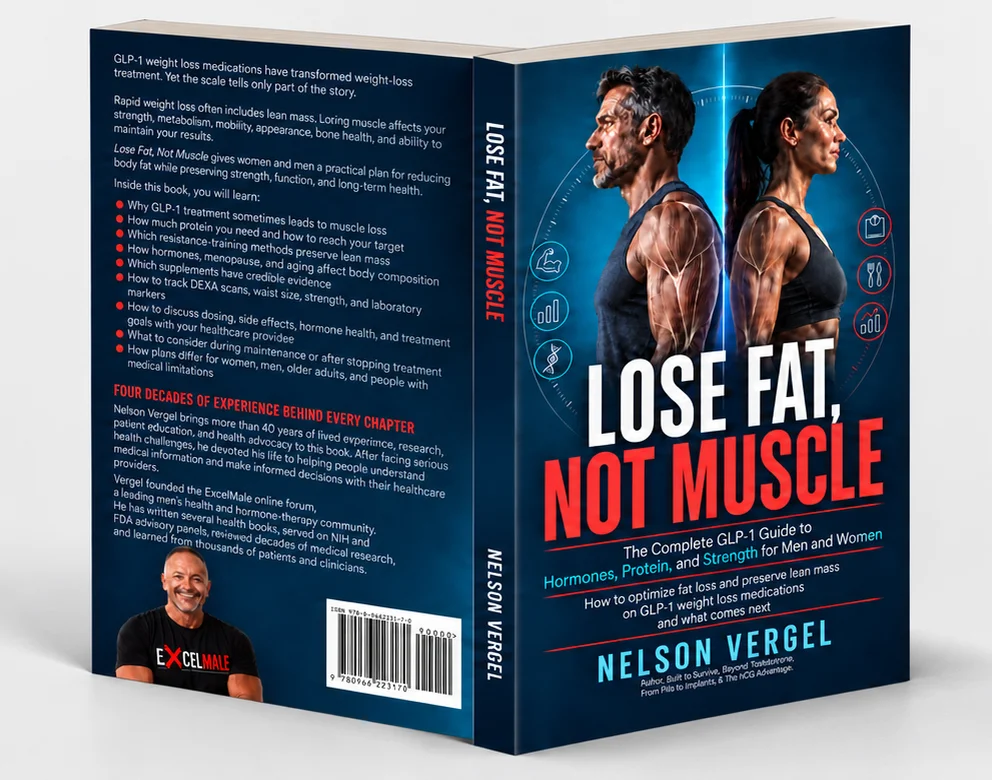


Nelson Vergel
Founder, ExcelMale.com
I enjoyed this interview with Paul Burguess from the UK. His site is www.athleticnutrition.tv
Background & Journey
Paul: Welcome to the show, Nelson. Tell us a bit about what you do and what brings you to this field.
Nelson: It's been a long road. I'm 58, originally from Venezuela, and moved to the States about 35 years ago. I'm a chemical engineer by training, but in 1994 I left engineering entirely because of my own circumstances. I've been HIV-positive for 34 years, and back in the early 1990s we had virtually nothing to treat the virus. People were wasting away — losing muscle, becoming skeletal — and doctors largely said, 'That's just the way it is.'
Nelson: I became obsessed with how bodybuilders maintained lean body mass, because that was exactly what we were losing to HIV. That led me into deep research on using hormones to reverse and prevent wasting syndrome, which was the number-one killer at the time. I've been on testosterone replacement therapy ever since.
Nelson: By the time HIV treatments improved dramatically, I shifted my focus to helping the broader male population with what I'd learned. HIV patients are, in many ways, ahead of the curve on hormones — when you're fighting for your life, the risk-to-benefit calculation looks very different, and doctors were willing to prescribe and study things they otherwise wouldn't. I was able to push for federal funding for anabolic steroid and testosterone research in the context of wasting syndrome. A lot of the data that benefits mainstream TRT patients today came from that HIV research era.
Nelson: I founded ExcelMale.com about five years ago because I saw enormous frustration online — men getting bullied, trolled, or dismissed on other forums when asking deeply personal questions about sexual function and hormones. I wanted to create a space where men feel genuinely safe. We've grown to over 15,000 members, and I also run a XXXXXXXX group called Testosterone Replacement Discussion with another 3,500-plus members.
What Is TRT, and Who Needs It?
Paul: For listeners who are newer to this, let's make sure they understand the difference between TRT and the heavy steroid use people associate with bodybuilding.
Nelson: It's a critical distinction. We're talking about taking someone whose hormone levels are suboptimal and restoring them to a healthy physiological range — not pushing far beyond natural levels to get massive. It's optimization, not augmentation.
"The goal is to bring someone back to where they should be — not to turn them into something they never were."
Paul: What symptoms should a man be watching for that might indicate low testosterone?
Nelson: The most common first signal is a decline in sex drive, followed by erratic erectile function. There's also an emotional and psychological snowball effect — once performance becomes unreliable, anxiety builds and the problem compounds. Beyond that: loss of motivation, difficulty coping with daily stress, fatigue, and gaining fat, particularly around the abdomen. Mood and cognitive sharpness both tend to suffer.
Nelson: What surprised me when I started ExcelMale was the age range. I expected to serve mostly men over 50. What I found was that the bulk of my community is men aged 25 to 45. Younger men today are dealing with factors that weren't as prevalent before: environmental toxins, processed food, chronic sleep deprivation driven by screens, and elevated baseline stress. Whether it's lower testosterone or simply greater awareness, younger men are experiencing and acknowledging these symptoms more than previous generations did.
Paul: I've been on TRT myself for about four weeks, after about a year of research. My numbers weren't technically low by NHS standards, but the symptoms were unmistakably there — reduced drive, declining libido, muscle mass fading, and most concerning to me, gaps in cognitive function. I kept losing words mid-sentence. I'd exhausted most other explanations — sleep was good, stress was managed — and decided TRT was the next logical step.
Nelson: That's the key issue with 'normal' ranges. Blood tests report population averages, not your personal optimal. A man who naturally ran high testosterone in his 20s may feel the effects of decline well before he drops below the clinical threshold. Symptoms matter as much as numbers.
Getting Tested & Navigating the Medical System
Nelson: In the US, the insurance-based system generally covers testosterone therapy only if total testosterone falls below 350 ng/dL. A cash-pay or men's health clinic operates without those restrictions, giving doctors more flexibility to treat symptomatic patients whose levels are in the 'gray zone.' Free testosterone — the unbound fraction that's actually biologically active — is often just as important as total testosterone but is frequently overlooked.
Nelson: Thyroid function is the other major variable that gets missed. Low thyroid produces nearly identical symptoms to low testosterone: fatigue, brain fog, weight gain, low mood. Anyone presenting with these symptoms should have both assessed before any treatment decisions are made.
Paul: In the UK, the NHS threshold is very restrictive — free testosterone needs to be extremely low on a sustained basis before treatment is considered. It's primarily a budget constraint. Private clinics offer an alternative, but it's a financial commitment.
Nelson: That's consistent with what I hear from the hundreds of UK members in my community. The frustration is real. But the UK does have access to some excellent testosterone formulations, including Sustanon and Nebido, which the US only adopted years later.
Delivery Methods & Formulations
Nelson: There's a wide menu of options. Historically we started with oral methyltestosterone, which proved hepatotoxic and fell out of use. Then came transdermal patches — still available but rarely preferred. Gels remain the top-selling formulation in the US by volume, largely because pharmaceutical companies promoted them heavily after the first gel received FDA approval in 1997. They're convenient and insurance-covered, though underdosing and transfer risk to partners are real concerns.
Nelson: Injections are where most experienced practitioners and informed patients end up, particularly testosterone cypionate or enanthate. They're cheap, generic, well-studied, and highly effective. Pellets — rice-sized implants placed subcutaneously, typically 10–12 at a time, lasting roughly three months — are another option, though less flexible for dose adjustments.
Nelson: Newer delivery methods include a nasal spray dosed three times daily and a buccal system applied to the gums twice daily. Neither has gained much traction because adherence suffers with frequent dosing. There's also a next-generation subcutaneous auto-injector in development that may simplify the process significantly.
Paul: What about injection technique? Needles intimidate a lot of men.
Nelson: The fear almost always exceeds the reality. The bodybuilding era left people imagining large-gauge needles and painful intramuscular injections into the glutes. Modern TRT doesn't look like that. A 27- or 29-gauge insulin syringe into the shoulder or abdominal fat is essentially painless. The key insight is that subcutaneous administration — injecting under the skin rather than deep into muscle — works just as well for smaller, more frequent doses, and it's far more comfortable and accessible. You can do it yourself, at home, without assistance.
"The goal is to remove every barrier to long-term adherence. If the injection is painful or complicated, people stop. Simple and painless means consistent."
Nelson: Injection frequency matters too. Many doctors still prescribe testosterone cypionate every two weeks, which creates a hormonal roller coaster — a peak followed by a significant trough before the next dose. Once or twice weekly injections maintain much steadier blood levels and typically produce better symptom control and tolerability.
HCG: Preserving Testicular Function
Paul: You've spoken extensively about HCG. For people who aren't familiar — why does it matter alongside TRT?
Nelson: When you introduce exogenous testosterone, your brain reads it as sufficient and shuts down its own signaling cascade — specifically, the hypothalamic-pituitary-gonadal (HPG) axis. The pituitary stops releasing LH (luteinizing hormone) and FSH, the testes stop producing their own testosterone, and sperm production effectively ceases. For men who want to preserve fertility, this matters enormously.
Nelson: HCG mimics LH structurally. When administered alongside testosterone, it keeps the testes active — maintaining size, sperm production, and the upstream hormone cascade. Baylor College of Medicine conducted research demonstrating that men on long-term testosterone who added HCG every other day were largely able to restore normal sperm production. Younger patients responded better; longer duration of prior testosterone use reduced efficacy.
Nelson: I've been combining testosterone and HCG in the same syringe and injecting twice weekly for years. It's simple, effective, and I notice a clear difference when I run out of HCG — libido drops, ejaculatory volume decreases. Beyond fertility, there's a reasonable theoretical argument that HCG preserves upstream hormones like progesterone and pregnenolone, which matter for mood, cognition, and sense of wellbeing.
Estrogen, Aromatization & a Controversial Stance
Paul: Walk us through the estrogen conversation. A lot of men on TRT are prescribed aromatase inhibitors almost automatically.
Nelson: I've become something of an anti-aromatase-inhibitor activist, which makes me unpopular in certain circles but I believe the data supports it. Testosterone naturally converts to estradiol via an enzyme called aromatase, primarily in fat cells and the liver. For years, the reflex response was to block this conversion because estrogen was viewed as feminine and inherently problematic for men.
Nelson: That view is wrong. Men need estrogen. It's synergistic with testosterone for bone density, sexual function, cognitive performance, and cardiovascular protection. Studies consistently show that testosterone without adequate estradiol delivers inferior benefits across all those domains.
Nelson: The most commonly cited fear is gynecomastia — breast tissue enlargement. But gynecomastia in adult men on physiologic TRT doses is actually uncommon. It's far more frequent in bodybuilders using supraphysiologic steroid doses. And ironically, gynecomastia is more strongly associated with estrogen excess in the context of low testosterone than with the levels seen during well-managed TRT.
Nelson: Aggressively suppressing estrogen with aromatase inhibitors causes real harm: joint pain, sexual dysfunction, decreased penile sensitivity, reduced bone density over time, and diminished mood. Many of the men in my community who were struggling on TRT had their problems traced back to overly suppressed estrogen — not elevated estrogen.
Nelson: One additional problem: the standard estrogen test used in most labs overestimates estradiol in men. Clinics are increasingly moving to the more sensitive LC-MS/MS assay, which shows that many men who were being treated as high-estrogen are actually within a perfectly healthy range.
Side Effects, Blood Work & Monitoring
Nelson: The most clinically significant side effect is erythrocytosis — an increase in red blood cell production. Testosterone stimulates bone marrow to produce more red blood cells, which is beneficial within limits but becomes a cardiovascular concern if hematocrit climbs too high. Blood viscosity increases, and the heart works harder.
Nelson: The management is straightforward: monitor hematocrit regularly. In the US, a hematocrit above 52% is the standard trigger to donate blood, which brings levels down rapidly. It's a $19 blood test. If a patient is walking around at 60–65% hematocrit without intervention, that's a serious oversight. The good news is that hematocrit tends to stabilize over time — it doesn't keep climbing indefinitely.
Nelson: Prostate cancer was the fear that dominated this field for decades. We now have substantial long-term data that puts that concern in much better perspective. Testosterone is contraindicated in men with active prostate cancer, and a PSA above 4 ng/mL requires urological evaluation before initiating therapy. But for the vast majority of men, the prostate cancer risk has been significantly overstated.
Nelson: Cardiovascular risk was also severely overstated following several poorly designed studies about a decade ago — studies so flawed that over 325 medical organizations signed a petition to have one of them retracted. More rigorous data since then has not confirmed a cardiovascular harm signal from well-managed physiologic TRT.
Paul: What does a responsible monitoring schedule look like?
Nelson: A baseline panel before starting, a follow-up at six weeks to check levels and make any dose adjustments, another at twelve weeks, then every six months on a stable regimen. The panel should include total and free testosterone, hematocrit, PSA, a lipid panel, and ideally a sensitive estradiol assay. Thyroid should be checked at baseline for anyone with overlapping symptoms. This isn't complicated — most of it is a single blood draw.
Setting Expectations: Timeline and Experience
Nelson: The biggest source of disappointment I see is unrealistic expectations. Men expect to inject testosterone on day one and feel transformed by day two. That's not how it works.
Nelson: Blood levels take several weeks to reach a steady state. Sexual thoughts and libido tend to improve first, often within three to four weeks. Body composition — fat loss and muscle gain — follows over months, and only if the person is exercising. Cognitive sharpness and emotional stability come gradually. The full picture often takes three to six months to emerge.
Paul: Four weeks in, I'm starting to notice real changes — particularly in cognitive function and energy. It's subtle but unmistakable. Early on I noticed shifts in libido. Only in the last week or so has the cognitive clarity really come through.
Nelson: That timeline is completely normal. Sleep quality, by the way, is enormous. The men who contact me saying TRT isn't working — the most common underlying explanation is poor sleep. Chronically disrupted sleep will blunt virtually every benefit TRT offers. So will uncontrolled systemic inflammation from a poor diet.
Nelson: As for stopping — it's important men know that coming off is possible, though not without a transition period. The body's own production is suppressed while on TRT and takes time to recover, typically two months or more. Some men fully recover their prior baseline; others do not, particularly after longer treatment durations. That's a real consideration, not a catastrophic one — but it deserves to be explained clearly before someone starts.
Dosing Philosophy
Nelson: A conservative starting point for testosterone cypionate or enanthate is 100 mg per week, with a ceiling around 200–250 mg per week for most men seeking physiologic replacement. Start low, retest at six weeks, and adjust. There's a camp that argues for starting higher and reducing if needed — neither approach is categorically wrong. The key is individual titration based on both symptoms and bloodwork, not cookie-cutter protocols.
Nelson: Ten men all given the same dose will have ten different responses — different absorption, different aromatization rates, different receptor sensitivity. That's why proactive engagement with your own treatment is essential. The men who do best are the ones who learn to read their own bloodwork, track their symptoms, and have productive conversations with their physicians rather than passively accepting whatever they're handed.
The Community & Resources
Paul: ExcelMale.com stands out for the tone. It's not the typical alpha-male posturing you see elsewhere.
Nelson: That was the deliberate founding mission. Men discussing erectile dysfunction or emotional symptoms in a space where no one is going to ridicule them. We moderate actively — removing anyone who bullies, tries to sell substances, or behaves like a troll. The result is that questions get answered around the clock by people who've been through it. We have over 65,000 archived posts, so most questions have been asked and answered already, and we link back to those threads.
Nelson: XXXXXXXX opened my eyes to how much the stigma has already receded. I thought most men would stay anonymous. What I found was thousands of men posting with their real faces, talking about testosterone and sexual health in front of tens of thousands of people. That's a cultural shift I didn't anticipate. Stigma is the enemy of health — it keeps men from seeking care they need.
Paul: Nelson, thank you for everything you do in this space. People can find Nelson at ExcelMale.com, and his book Testosterone: A Man's Guide is available on Amazon. We'll definitely have you back.
Nelson: Big thanks to all the listeners in the UK — you're actually among the most advanced in Europe on this topic, based on what I'm seeing. Hope to get over there one day and lecture in person. Thanks for having me.
Athletic Fitness & Nutrition Podcast
Testosterone Replacement Therapy:
An In-Depth Conversation with Nelson Vergel
Host: Paul Burgess | Guest: Nelson Vergel
ExcelMale.com • DiscountedLabs.com
Testosterone Replacement Therapy:
An In-Depth Conversation with Nelson Vergel
Host: Paul Burgess | Guest: Nelson Vergel
ExcelMale.com • DiscountedLabs.com
Background & Journey
Paul: Welcome to the show, Nelson. Tell us a bit about what you do and what brings you to this field.
Nelson: It's been a long road. I'm 58, originally from Venezuela, and moved to the States about 35 years ago. I'm a chemical engineer by training, but in 1994 I left engineering entirely because of my own circumstances. I've been HIV-positive for 34 years, and back in the early 1990s we had virtually nothing to treat the virus. People were wasting away — losing muscle, becoming skeletal — and doctors largely said, 'That's just the way it is.'
Nelson: I became obsessed with how bodybuilders maintained lean body mass, because that was exactly what we were losing to HIV. That led me into deep research on using hormones to reverse and prevent wasting syndrome, which was the number-one killer at the time. I've been on testosterone replacement therapy ever since.
Nelson: By the time HIV treatments improved dramatically, I shifted my focus to helping the broader male population with what I'd learned. HIV patients are, in many ways, ahead of the curve on hormones — when you're fighting for your life, the risk-to-benefit calculation looks very different, and doctors were willing to prescribe and study things they otherwise wouldn't. I was able to push for federal funding for anabolic steroid and testosterone research in the context of wasting syndrome. A lot of the data that benefits mainstream TRT patients today came from that HIV research era.
Nelson: I founded ExcelMale.com about five years ago because I saw enormous frustration online — men getting bullied, trolled, or dismissed on other forums when asking deeply personal questions about sexual function and hormones. I wanted to create a space where men feel genuinely safe. We've grown to over 15,000 members, and I also run a XXXXXXXX group called Testosterone Replacement Discussion with another 3,500-plus members.
What Is TRT, and Who Needs It?
Paul: For listeners who are newer to this, let's make sure they understand the difference between TRT and the heavy steroid use people associate with bodybuilding.
Nelson: It's a critical distinction. We're talking about taking someone whose hormone levels are suboptimal and restoring them to a healthy physiological range — not pushing far beyond natural levels to get massive. It's optimization, not augmentation.
"The goal is to bring someone back to where they should be — not to turn them into something they never were."
Paul: What symptoms should a man be watching for that might indicate low testosterone?
Nelson: The most common first signal is a decline in sex drive, followed by erratic erectile function. There's also an emotional and psychological snowball effect — once performance becomes unreliable, anxiety builds and the problem compounds. Beyond that: loss of motivation, difficulty coping with daily stress, fatigue, and gaining fat, particularly around the abdomen. Mood and cognitive sharpness both tend to suffer.
Nelson: What surprised me when I started ExcelMale was the age range. I expected to serve mostly men over 50. What I found was that the bulk of my community is men aged 25 to 45. Younger men today are dealing with factors that weren't as prevalent before: environmental toxins, processed food, chronic sleep deprivation driven by screens, and elevated baseline stress. Whether it's lower testosterone or simply greater awareness, younger men are experiencing and acknowledging these symptoms more than previous generations did.
Paul: I've been on TRT myself for about four weeks, after about a year of research. My numbers weren't technically low by NHS standards, but the symptoms were unmistakably there — reduced drive, declining libido, muscle mass fading, and most concerning to me, gaps in cognitive function. I kept losing words mid-sentence. I'd exhausted most other explanations — sleep was good, stress was managed — and decided TRT was the next logical step.
Nelson: That's the key issue with 'normal' ranges. Blood tests report population averages, not your personal optimal. A man who naturally ran high testosterone in his 20s may feel the effects of decline well before he drops below the clinical threshold. Symptoms matter as much as numbers.
Getting Tested & Navigating the Medical System
Nelson: In the US, the insurance-based system generally covers testosterone therapy only if total testosterone falls below 350 ng/dL. A cash-pay or men's health clinic operates without those restrictions, giving doctors more flexibility to treat symptomatic patients whose levels are in the 'gray zone.' Free testosterone — the unbound fraction that's actually biologically active — is often just as important as total testosterone but is frequently overlooked.
Nelson: Thyroid function is the other major variable that gets missed. Low thyroid produces nearly identical symptoms to low testosterone: fatigue, brain fog, weight gain, low mood. Anyone presenting with these symptoms should have both assessed before any treatment decisions are made.
Paul: In the UK, the NHS threshold is very restrictive — free testosterone needs to be extremely low on a sustained basis before treatment is considered. It's primarily a budget constraint. Private clinics offer an alternative, but it's a financial commitment.
Nelson: That's consistent with what I hear from the hundreds of UK members in my community. The frustration is real. But the UK does have access to some excellent testosterone formulations, including Sustanon and Nebido, which the US only adopted years later.
Delivery Methods & Formulations
Nelson: There's a wide menu of options. Historically we started with oral methyltestosterone, which proved hepatotoxic and fell out of use. Then came transdermal patches — still available but rarely preferred. Gels remain the top-selling formulation in the US by volume, largely because pharmaceutical companies promoted them heavily after the first gel received FDA approval in 1997. They're convenient and insurance-covered, though underdosing and transfer risk to partners are real concerns.
Nelson: Injections are where most experienced practitioners and informed patients end up, particularly testosterone cypionate or enanthate. They're cheap, generic, well-studied, and highly effective. Pellets — rice-sized implants placed subcutaneously, typically 10–12 at a time, lasting roughly three months — are another option, though less flexible for dose adjustments.
Nelson: Newer delivery methods include a nasal spray dosed three times daily and a buccal system applied to the gums twice daily. Neither has gained much traction because adherence suffers with frequent dosing. There's also a next-generation subcutaneous auto-injector in development that may simplify the process significantly.
Paul: What about injection technique? Needles intimidate a lot of men.
Nelson: The fear almost always exceeds the reality. The bodybuilding era left people imagining large-gauge needles and painful intramuscular injections into the glutes. Modern TRT doesn't look like that. A 27- or 29-gauge insulin syringe into the shoulder or abdominal fat is essentially painless. The key insight is that subcutaneous administration — injecting under the skin rather than deep into muscle — works just as well for smaller, more frequent doses, and it's far more comfortable and accessible. You can do it yourself, at home, without assistance.
"The goal is to remove every barrier to long-term adherence. If the injection is painful or complicated, people stop. Simple and painless means consistent."
Nelson: Injection frequency matters too. Many doctors still prescribe testosterone cypionate every two weeks, which creates a hormonal roller coaster — a peak followed by a significant trough before the next dose. Once or twice weekly injections maintain much steadier blood levels and typically produce better symptom control and tolerability.
HCG: Preserving Testicular Function
Paul: You've spoken extensively about HCG. For people who aren't familiar — why does it matter alongside TRT?
Nelson: When you introduce exogenous testosterone, your brain reads it as sufficient and shuts down its own signaling cascade — specifically, the hypothalamic-pituitary-gonadal (HPG) axis. The pituitary stops releasing LH (luteinizing hormone) and FSH, the testes stop producing their own testosterone, and sperm production effectively ceases. For men who want to preserve fertility, this matters enormously.
Nelson: HCG mimics LH structurally. When administered alongside testosterone, it keeps the testes active — maintaining size, sperm production, and the upstream hormone cascade. Baylor College of Medicine conducted research demonstrating that men on long-term testosterone who added HCG every other day were largely able to restore normal sperm production. Younger patients responded better; longer duration of prior testosterone use reduced efficacy.
Nelson: I've been combining testosterone and HCG in the same syringe and injecting twice weekly for years. It's simple, effective, and I notice a clear difference when I run out of HCG — libido drops, ejaculatory volume decreases. Beyond fertility, there's a reasonable theoretical argument that HCG preserves upstream hormones like progesterone and pregnenolone, which matter for mood, cognition, and sense of wellbeing.
Estrogen, Aromatization & a Controversial Stance
Paul: Walk us through the estrogen conversation. A lot of men on TRT are prescribed aromatase inhibitors almost automatically.
Nelson: I've become something of an anti-aromatase-inhibitor activist, which makes me unpopular in certain circles but I believe the data supports it. Testosterone naturally converts to estradiol via an enzyme called aromatase, primarily in fat cells and the liver. For years, the reflex response was to block this conversion because estrogen was viewed as feminine and inherently problematic for men.
Nelson: That view is wrong. Men need estrogen. It's synergistic with testosterone for bone density, sexual function, cognitive performance, and cardiovascular protection. Studies consistently show that testosterone without adequate estradiol delivers inferior benefits across all those domains.
Nelson: The most commonly cited fear is gynecomastia — breast tissue enlargement. But gynecomastia in adult men on physiologic TRT doses is actually uncommon. It's far more frequent in bodybuilders using supraphysiologic steroid doses. And ironically, gynecomastia is more strongly associated with estrogen excess in the context of low testosterone than with the levels seen during well-managed TRT.
Nelson: Aggressively suppressing estrogen with aromatase inhibitors causes real harm: joint pain, sexual dysfunction, decreased penile sensitivity, reduced bone density over time, and diminished mood. Many of the men in my community who were struggling on TRT had their problems traced back to overly suppressed estrogen — not elevated estrogen.
Nelson: One additional problem: the standard estrogen test used in most labs overestimates estradiol in men. Clinics are increasingly moving to the more sensitive LC-MS/MS assay, which shows that many men who were being treated as high-estrogen are actually within a perfectly healthy range.
Side Effects, Blood Work & Monitoring
Nelson: The most clinically significant side effect is erythrocytosis — an increase in red blood cell production. Testosterone stimulates bone marrow to produce more red blood cells, which is beneficial within limits but becomes a cardiovascular concern if hematocrit climbs too high. Blood viscosity increases, and the heart works harder.
Nelson: The management is straightforward: monitor hematocrit regularly. In the US, a hematocrit above 52% is the standard trigger to donate blood, which brings levels down rapidly. It's a $19 blood test. If a patient is walking around at 60–65% hematocrit without intervention, that's a serious oversight. The good news is that hematocrit tends to stabilize over time — it doesn't keep climbing indefinitely.
Nelson: Prostate cancer was the fear that dominated this field for decades. We now have substantial long-term data that puts that concern in much better perspective. Testosterone is contraindicated in men with active prostate cancer, and a PSA above 4 ng/mL requires urological evaluation before initiating therapy. But for the vast majority of men, the prostate cancer risk has been significantly overstated.
Nelson: Cardiovascular risk was also severely overstated following several poorly designed studies about a decade ago — studies so flawed that over 325 medical organizations signed a petition to have one of them retracted. More rigorous data since then has not confirmed a cardiovascular harm signal from well-managed physiologic TRT.
Paul: What does a responsible monitoring schedule look like?
Nelson: A baseline panel before starting, a follow-up at six weeks to check levels and make any dose adjustments, another at twelve weeks, then every six months on a stable regimen. The panel should include total and free testosterone, hematocrit, PSA, a lipid panel, and ideally a sensitive estradiol assay. Thyroid should be checked at baseline for anyone with overlapping symptoms. This isn't complicated — most of it is a single blood draw.
Setting Expectations: Timeline and Experience
Nelson: The biggest source of disappointment I see is unrealistic expectations. Men expect to inject testosterone on day one and feel transformed by day two. That's not how it works.
Nelson: Blood levels take several weeks to reach a steady state. Sexual thoughts and libido tend to improve first, often within three to four weeks. Body composition — fat loss and muscle gain — follows over months, and only if the person is exercising. Cognitive sharpness and emotional stability come gradually. The full picture often takes three to six months to emerge.
Paul: Four weeks in, I'm starting to notice real changes — particularly in cognitive function and energy. It's subtle but unmistakable. Early on I noticed shifts in libido. Only in the last week or so has the cognitive clarity really come through.
Nelson: That timeline is completely normal. Sleep quality, by the way, is enormous. The men who contact me saying TRT isn't working — the most common underlying explanation is poor sleep. Chronically disrupted sleep will blunt virtually every benefit TRT offers. So will uncontrolled systemic inflammation from a poor diet.
Nelson: As for stopping — it's important men know that coming off is possible, though not without a transition period. The body's own production is suppressed while on TRT and takes time to recover, typically two months or more. Some men fully recover their prior baseline; others do not, particularly after longer treatment durations. That's a real consideration, not a catastrophic one — but it deserves to be explained clearly before someone starts.
Dosing Philosophy
Nelson: A conservative starting point for testosterone cypionate or enanthate is 100 mg per week, with a ceiling around 200–250 mg per week for most men seeking physiologic replacement. Start low, retest at six weeks, and adjust. There's a camp that argues for starting higher and reducing if needed — neither approach is categorically wrong. The key is individual titration based on both symptoms and bloodwork, not cookie-cutter protocols.
Nelson: Ten men all given the same dose will have ten different responses — different absorption, different aromatization rates, different receptor sensitivity. That's why proactive engagement with your own treatment is essential. The men who do best are the ones who learn to read their own bloodwork, track their symptoms, and have productive conversations with their physicians rather than passively accepting whatever they're handed.
The Community & Resources
Paul: ExcelMale.com stands out for the tone. It's not the typical alpha-male posturing you see elsewhere.
Nelson: That was the deliberate founding mission. Men discussing erectile dysfunction or emotional symptoms in a space where no one is going to ridicule them. We moderate actively — removing anyone who bullies, tries to sell substances, or behaves like a troll. The result is that questions get answered around the clock by people who've been through it. We have over 65,000 archived posts, so most questions have been asked and answered already, and we link back to those threads.
Nelson: XXXXXXXX opened my eyes to how much the stigma has already receded. I thought most men would stay anonymous. What I found was thousands of men posting with their real faces, talking about testosterone and sexual health in front of tens of thousands of people. That's a cultural shift I didn't anticipate. Stigma is the enemy of health — it keeps men from seeking care they need.
Paul: Nelson, thank you for everything you do in this space. People can find Nelson at ExcelMale.com, and his book Testosterone: A Man's Guide is available on Amazon. We'll definitely have you back.
Nelson: Big thanks to all the listeners in the UK — you're actually among the most advanced in Europe on this topic, based on what I'm seeing. Hope to get over there one day and lecture in person. Thanks for having me.
Last edited: